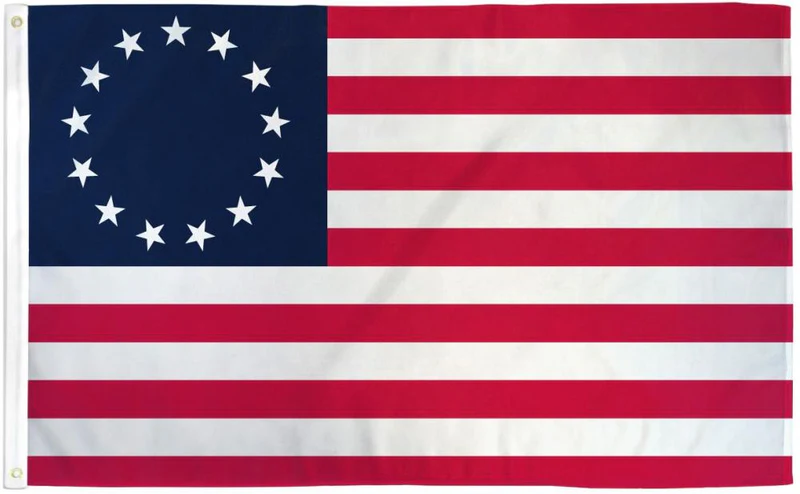
Colonial America to Revolutionary War
|
|
O, let America be America again — The land that never has been yet — And yet must be — the land where every man is free. — Langston Hughes
Those who would give up essential liberty to purchase a little temporary safety-deserve neither liberty nor safety. — Benjamin Franklin
Power concedes nothing without a demand. It never did and it never will. — Frederick Douglass
I had always hoped that this land might become a safe & agreeable Asylum to the virtuous & persecuted part of mankind, to whatever nation they might belong. — George Washington, in a 1788 letter he wrote to Adrian Van der Kemp
|
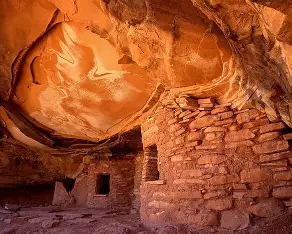
| Ancestral Puebloans Ruins |
While some Indians were nomadic hunters, others had developed agriculture. They spoke hundreds of different languages. They came to the Americas about 25,000 years ago using a land bridge from Asia. Thousands of years ago, Moundbuilders in the Ohio River Valley built enormous sculptures in the shape of birds, lizards and so forth. In what is now New Mexico Zuni and Hopi Indians built large terraced buildings among cliffs and mountains. They had irrigation canals, dams, ceramics, cloth woven from cotton and woven baskets. Around 500 A.D. in the valley of the Mississippi there were thousands of villages with toolmakers, hide dressers, potters, jewelry makers, weavers, saltmakers, copper engravers, ceramists and advanced agriculture. A number of white Americans lived among Indian tribes and preferred Indian society to white society. Some tribes were peaceful, others were warlike. All of them were outgunned by European Americans.
From the Adirondacks to the Great Lakes lived the five (later to become six) tribes forming the League of the Iroquois. These were the Mohawks (People of the Flint), Oneidas (People of the Stone), Onondagas (People of the Mountain), Cayugas (People at the Landing) and Senecas (Great Hill People). After 1722, the Iroquoian-speaking Tuscarora people from the southeast were accepted into the confederacy, from which point it was known as the Six Nations. They all spoke the same Iroquois language. All the land of the Iroquois was owned and worked in common. Hunting was done together, and the catch was divided among the members of the villages. Houses were common property and were shared by multiple families. They didn't understand private property. A French Jesuit priest who visited them said, "No poorhouses are needed among them, because they are neither mendicants not paupers. ... Their kindness, humanity and courtesy not only makes them liberal with what they have, but causes them to possess hardly anything except in common."
Families were grouped together in clans, and a dozen or more clans made up a village. Women were important among the Iroquois. Families were matrilineal. Each extended family lived in a long house. Women named the clan leaders and also named the 49 chiefs for the ruling council of the Iroquois Confederacy. Women also removed men who strayed too far from the wishes of the women. They tended crops while the men hunted and fished. Children were taught sharing of possessions, equality of status and to be independent. As Gary Nash described:

No laws and ordinances, sheriffs and constables, judges and juries, or courts or jails-the apparatus of authority in European societies-were to be found in the northeast woodlands prior to European arrival. Yet boundaries of acceptable behavior were firmly set. Though priding themselves on the autonomous individual, the Iroquois maintained a strict sense of right and wrong. ... He who stole another's food or acted invalourously in war was "shamed" by his people and ostracized from their company until he had atoned for his actions and demonstrated to their satisfaction that he had morally purified himself.

From 75 to 90 percent of North American Native Americans were estimated to have died from a lack of immunity to European diseases. These deaths were mostly accidental but catastrophic to Native Americans. The rest were pushed aside from Indian wars. British Field Marshal Jeffery Amherst deliberately gave blankets infected with smallpox to Native Americans in an attempt to kill them during Pontiac's War in 1763. Amherst College is named after him.
In June 1526, Spanish explorer Lucas Vázquez de Ayllón led an expedition to establish a colony called San Miguel de Gualdape, likely located near the Pee Dee River in present-day South Carolina. Among the approximately 600 settlers were around 100 enslaved Africans, who are recognized as the first documented Africans brought to what is now the United States. These individuals were taken from West Africa or through the Caribbean slave markets. The colony faced numerous challenges, including disease, starvation, and conflicts with local Indigenous peoples. By mid to late October 1526, the enslaved Africans rebelled against their conditions, burning colonists' homes and escaping into the wilderness. Many found refuge among nearby Native nations, forming one of the earliest known examples of African and Indigenous solidarity against European colonization. The rebellion and the harsh conditions led to the colony's rapid decline. After Ayllón's death on October 18, 1526, the remaining Spanish settlers abandoned San Miguel de Gualdape by November, returning to Hispaniola. The escaped Africans were never recaptured.
The Roanoke Colony refers to two attempts by Sir Walter Raleigh to found the first permanent English settlement in North America. The first colony was established at Roanoke Island in 1585 as a military outpost, and was evacuated in 1586. The second colony, known as the Lost Colony, began when a new group of settlers under John White arrived on the island in 1587; a relief ship in 1590 found the colony mysteriously abandoned. All that was left was the word on a wooden post that said "Croatoan." Croatoan was the name of an island. It was also the name of an Indian tribe that lived on the island. The fate of the 112 to 121 colonists remains unknown.
Also in 1585 Richard Grenville landed in Virginia with seven ships. When one Indian stole a small silver cup Grenville sacked and burned the entire village.
In 1600, Tidewater Virginia was occupied by 15,000 Algonquian-speaking Indians. Led by chief Powhatan, they farmed in small villages during the summer and, during the winter, hunted deer and gathered nuts. They supplemented their diets by diving for oysters, fishing for sturgeon, and wading into the freshwater marshes to pull tuckahoe.
The first successful British colony began at Jamestown, Virginia, which was settled in 1607. By 1607 Powhatan controlled twenty-eight to thirty-two tribes covering about 8,000 square miles. Powhatan both feasted and fought the Englishmen. During a terrible drought, the settlers took corn from the Indians at gunpoint. For a short time, Powhatan cut them off from all food, leading to the Starving Time, the bloody First Anglo-Powhatan War (1609–1614), and, in one instance at least, the revenge-killing of Indian women and children. During a time of famine in the winter of 1609 to 1610 a man was convicted of eating his own wife. With John Rolfe's marriage to Powhatan's daughter Pocahontas in 1614, the First Anglo-Powhatan War ended and the English emerged from the safety of James Fort to establish settlements such as Bermuda Hundred up and down the James River.
During the"starving time" from 1609 to 1610 colonists roamed the forests for nuts and berries, dug up graves to eat the corpses and died until 500 colonists were reduced to 60. A document from 1619 describes the starvation as follows,
... driven thru insufferable hunger to eat those things which nature most abhorred, the flesh and excrements of man as well as our own nation as of an Indian, digged by some out of his grave after he had lain buried three days and wholly devoured him; others, envying the better state of body of any whom hunger has not yet so much wasted as their own, lay wait and threatened to kill and eat them; one among them slew his wife as she slept in his bosom, cut her in pieces, salted her and fed upon her till he had clean devoured all parts saving her head ...
In the winter of 1610, the "starving time," some Englishmen left Jamestown and lived with the Indians. When the governor sent a message asking Powhatan to return the runaways, Powhatan replied with "noe other than prowde and disdaynefull Answers." Settlers were sent "to take Revendge." They killed 15 or 16 Indians, burned down houses, cut down corn, put the queen and her children in a boat, threw the children overboard "and shoteinge owtt their Braynes in the water." The queen was later stabbed to death.
A petition by 30 colonists to the House of Burgesses read,
In those 12 years of Sir Thomas Smith, his government, we aver that the colony for the most part remained in great want and misery under most severe and cruel laws ... The allowance in those times for a man was only eight ounces of meale and half a pint of peas for a day ... moldy, rotton, full of cobwebs and maggots, loathsome to man and not fit for beasts, which forced many to flee for relief to the savage enemy, who being taken again were put to sundry deaths as by hanging, shooting and breaking upon the wheel ... of whom one for stealing two or three pints of oatmeal had a bodkin thrust through his tongue and was tied with a chain to a tree until he starved ...
In 1619, the British brought 20 African slaves to Virginia. At first, Indians and indentured servants were used for labor. Indians lacked resistance to European diseases, and indentured servants gained their freedom after working for a set number of years, so African slaves were used instead. African tribes would often sell captured blacks from rival tribes to European and American enslavers. About two out of five slaves died when marched in chains from the African interior to the coast. Many more slaves died on slave ships because of horrible and unsanitary conditions. Slaves were chained in very crowded conditions in holds with a height of 18 to 24 inches, not enough room to turn around, and left in their own excrement. Some suffocated to death. In 1637 the first American slave ship, the Desire, sailed from Marblehead. The slaves grew tobacco, which became popular in Europe.
African tribes had slavery, but it was milder than slavery in America. For example, in the Ashanti Kingdom in West Africa, slaves could marry, own property, own a slave, swear an oath, be a competent witness and ultimately become heir to their master. However, African tribes would capture people who were traded to Europeans to be enslaved. While many captives died in slave ships, the survivors were sold at slave auctions.
After Powhatan's death his close relative, Opechancanough, led the Indians in a massive surprise attack against the English in 1622. The Indians killed 347 men, women and children. The Second Anglo-Powhatan War (1622–1632) ended in the Indians' defeat. As described by historian Edmund Morgan,
Since the Indians were better woodsmen than the English and virtually impossible to track down, the method was to feign peaceful intentions, let them settle down and plant their corn wherever they chose, and then, just before harvest, fall upon them, killing as many as possible and burning the corn ... Within two or three years of the massacre the English had avenged the deaths of that day many times over.
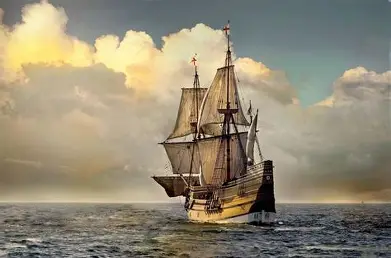
In 1620 Pilgrims established Plymouth Colony to escape persecution in Europe. They came aboard the Mayflower. A group of colonists drafted and signed the Mayflower Compact while still aboard the ship as it lay at anchor, which became the first governing document for the colony. The intent of the compact was to establish a means of governing the colony, though it did little more than confirm that the colony would be governed like any English town. Myles Standish was the colony's military leader.
|
| Mayflower |
There are no contemporary references to the Pilgrims' landing on a rock at Plymouth. There are two primary sources written by the Pilgrims themselves describing the landing in Plymouth in 1620, William Bradford's journal Of Plymouth Plantation and the 1622 book popularly known as Mourt's Relation. Both simply say that the Pilgrims landed. Neither mentions any rocks in their account of the landing. The first references to Plymouth Rock are found over 100 years after the actual landing.
On March 16, 1621, the first formal contact occurred with the Indians. Samoset was an Abenaki sagamore who was originally from Pemaquid Point in Maine. He had learned some English from fishermen and trappers in Maine, and he walked into the midst of the settlement and proclaimed, "Welcome, Englishmen!" An important leader of the region was Wampanoag Indian chief Massasoit, and they learned about Squanto who was the sole survivor of an epidemic in Patuxet. Squanto had spent time in Europe and spoke English quite well. John Winthrop, the governor of the Massachusetts Bay Colony, said that Indians had only a "natural" right to the land, but not a "civil right," and that a natural right had no legal standing.
Massasoit and Squanto were apprehensive about the Pilgrims, as several men of his tribe had been killed by English sailors. They also knew that the Pilgrims had taken some corn stores in their landings at Provincetown. Squanto himself had been abducted in 1614 by English explorer Thomas Hunt and had spent five years in Europe, first as a slave for a group of Spanish monks, then as a freeman in England. He had returned to New England in 1619, acting as a guide to explorer Captain Robert Gorges, but Massasoit and his men had massacred the crew of the ship and had taken Squanto.
Samoset returned to Plymouth on March 22 with a delegation from Massasoit that included Squanto; Massasoit joined them shortly after, and he and Governor Carver established a formal treaty of peace after exchanging gifts. This treaty ensured that each people would not bring harm to the other, that Massasoit would send his allies to make peaceful negotiations with Plymouth, and that they would come to each other's aid in a time of war.
The Mayflower set sail for England on April 5, 1621, after being anchored for almost four months in Plymouth Harbor. Nearly half of the original 102 passengers had died during the first winter.
The first Thanksgiving feast was held in 1621 and was celebrated by the 53 surviving Pilgrims, along with Massasoit and 90 of his men. The celebration lasted three days and featured a feast that included numerous types of waterfowl, wild turkeys and fish procured by the colonists, and five deer brought by the Wampanoags.
As promised by Massasoit, numerous Natives arrived at Plymouth throughout the middle of 1621 with pledges of peace. Massasoit agreed to an exclusive trading pact with the Plymouth colonists.
The Pequots lived in southern Connecticut and Rhode Island. The murder of a white trader and Indian-kidnapper was used as a pretext for the Pequot War. A punitive expedition left Boston for Block Island to attack Narragansetts, who were lumped in with Pequots. As Governor Winthrop wrote,
They had commission to put to death the men of Block Island, but to spare the women and children, and to bring them away,and to take possession of the island; and from thence to go to the Pequods to demand the murderers of Captain Stone and other English, and one thousand fathom of wampom for damages, etc. and some of their children as hostages, which if they should refuse, they were to obtain by force.
The English killed some Indians on the island, but the rest hid in the forest. The English destroyed crops both on and off the island. One of the officers of the expidition wrote, "The Indians spying on us came running in multitudes along the water side, crying, What cheer, Englishmen, what cheer, what do you come for? They not thinking we intended war, went on cheerfully."
The Pequot War was an armed conflict that took place in 1636 and ended in 1638 in New England, between the Pequot nation and an alliance of the colonists from the Massachusetts Bay, Plymouth, and Saybrook colonies and their allies from the Narragansett and Mohegan nations. The war concluded with the decisive defeat of the Pequot. In an event called the Mystic massacre, English colonists of the Connecticut Colony and their allies set the village of Pequot Fort ablaze, blocked the exits, and shot anyone trying to escape. At the end, about 700 Pequots had been killed or taken into captivity. Hundreds of prisoners were sold into slavery to colonists in Bermuda or the West Indies; other survivors were dispersed as captives to the victorious nation. William Bradford described John Mason's raid on a Pequot village:
Those that scaped the fire were slaine with the sword; some hewed to peeces, others rune throw with their rapiers, so as they were quickly dispatchte, and very few escaped. It was conceived they thus destroyed about 400 at this time. It was a fearful sight to see them thus frying in the fyer, and the streams of blood quenching the same, and horrible was the stincke and sente there of; but the victory seemed a sweete sacrifice, and they gave the prayers thereof to God, who had wrought so wonderfully for them, thus to inclose their enemise in their hands, and give them so speedy a victory over so proud and insulting an enimie.
The slaughter shocked the Narragansetts, who merely wanted to subjugate the Pequots, not exterminate them. One said, "It is naught, it is naught, because it is too furious, and slays too many men." Capt. John Underhill said that the Narragansett's style of fighting was "more for pastime, than to conquer and subdue enemies."
The Treaty of Hartford of 1638 sought to eradicate the Pequot cultural identity by prohibiting the Pequots from returning to their lands, speaking their tribal language, or referring to themselves as Pequots. The result was the elimination of the Pequot nation as a viable polity in southern New England, and the colonial authorities classified them as extinct. Survivors who remained in the area were absorbed into other local nations.
The colony established a treaty with Wampanoag Chief Massasoit, which helped to ensure its success; in this, they were aided by Squanto, a member of the Patuxet tribe.
Massasoit died, and his son Wamsutta had been killed by Englishmen. Wamsutta's brother Metacom (known as King Philip by the English) became chief. The English wanted land from the Wampanoags, and used a murder they blamed on Metacom as a pretext to start King Philip's War. Plymouth played a central role in King Philip's War (1675–1678), one of several Indian Wars. The war began when New England whites executed three Wampanoag Indians, and the Indians attacked. Native leader Miantonomo said, "Our fathers had plenty of deer and skins, our plains were full of deer, as also our woods, and of turkeys, and our coves full of fish and fowl. But these English having gotten our land, they with scythes cut down the grass, and with axes fell the trees; their cows and horses eat the grass, and their hogs spoil our clam banks, and we shall be starved." By the end of the war, most of the dead were Indians.
Bacon's Rebellion was an armed rebellion by Virginia settlers that took place from 1676 to 1677. Before the rebellion, Doeg Indians took hogs to settle a debt, and whites seized the hogs and killed two Indians. The Doegs killed a white herdsman, and the settlers killed 24 Indians in retaliation. The Indians were outnumbered and resorted to guerrilla warfare. The House of Burgesses at Jamestown declared war on Indians, but exempted the Indians who cooperated. Settlers wanted a war on all the Indians, but resented a tax to pay for the Indian war. Also, poor crops spread economic hardship, as there was little corn to eat and little tobacco to export due to a dry summer. The rebellion was led by Nathaniel Bacon against Colonial Governor William Berkeley after Berkeley refused Bacon's requests in his 1676 Declaration of the People. In his Declaration, Bacon demanded that Berkeley drive Indians out of Virginia. In addition, Bacon accused Berkeley of unjust taxes, putting favorites in high positions and monopolizing the beaver trade. Thousands of Virginians from all classes (including those in indentured servitude and slavery) and races rose up in arms against Berkeley, chasing him from Jamestown and ultimately torching the settlement. Bacon's mob attacked the friendly Pamunkey Indian tribe, killing eight, taking others prisoner and plundering their possessions. The rebellion was first suppressed by a few armed merchant ships from London whose captains sided with Berkeley and the loyalists.
Government forces led by Herbert Jeffreys arrived soon after and spent several years defeating pockets of resistance and reforming the colonial government to be once more under direct Crown control. While the rebellion did not succeed in the initial goal of driving Native Americans from Virginia, it did result in Berkeley being recalled to England, where he died shortly thereafter.
The Virginia Assembly granted amnesty to the whites who took part in Bacon's Rebellion, but not the blacks. Blacks weren't allowed to carry arms, while white servants who completed their terms of service got muskets, corn and cash. In the 1720s, white servants were allowed to join the militia as substitutes. Poor whites formed slave patrols as fears of slave insurrections grew. In years to come slaveowners tried to gain the support of poor whites, to prevent them from uniting with slaves.
Indentured servants were poor European whites who agreed to work as servants for a set number of years in return for the person they worked for paying for their voyages to America. There were laws punishing the poor in England. They could be sent to workhouses or whipped for begging, so many looked to America for an opportunity. They were better off than slaves because their terms of service weren't for life. If the ship taking them to America ran out of food because of bad weather, some of them starved to death. In 1741 the Sea Flower sailed from Belfast to Boston. The voyage took 16 weeks. Out of 106 passengers, 46 died from starvation, six of whom were eaten by the survivors. On another trip 32 children died of hunger and disease and were thrown overboard. Indentured servants were sold the same as slaves. They were beaten and whipped, and women were raped.
The Fundamental Constitutions of Carolina were adopted on March 1, 1669 by the eight Lords Proprietors of the Province of Carolina, which included most of the land between what is now Virginia and Florida. John Lock had a role in writing the document, although the extent of his involvement is in dispute. Locke later wrote ideas that led to democracy, but the Fundamental Constitution established a feudal type aristocracy. After a rebellion against the land arrangement, the crown took over the government of North Carolina, and rich speculators seized half a million acres of land, taking the best farmland near the coast.
The notorious article 110 of the Constitutions stated that "Every freeman of Carolina shall have absolute power and authority over his negro slaves, of what opinion or religion soever." Pursuant to this provision slaveholders were granted absolute power of life and death over their slaves. Additionally, the Fundamental Constitutions held that being a Christian does not alter the civil dominion of a master over his slaves. Because the King's original charter to the eight proprietors for Carolina prevented the proprietors from granting titles already in use in England, such as Earl or Baron, they created two new titles, cassique and landgrave, that would be passed down from father to son. Those nobles were granted privileges such as being tried only in Chief Justice's Court and being found guilty by a jury of their peers. The Constitutions introduced also a hereditary serfdom system, the members of which were called leetmen, in addition to slavery.
Like the slaves, the leetmen and leetwomen were under command and jurisdiction of noblemen to whom they serve. Through the Constitutions, the Lords Proprietor and the noblemen owned two-fifths of the Colony's vast lands. By the same token, the freemen had the right to property for the rest of the land, and any among them who owned more than fifty acres had right to vote, and any who had more than five-hundred acres of land had the right to be a member of Parliament. This requirement of land ownership has been considered as relatively favorable to the freemen in comparison to that of England. Elections were to be held by secret ballot, which was not yet common practice in England.
Locke regretted that the labor of poor children "is generally lost to the public till they are twelve or fourteen years old."
King William's War was the North American theater of the Nine Years' War (1688–1697), also known as the War of the League of Augsburg. It was the first of six colonial wars (see the four French and Indian Wars, Father Rale's War and Father Le Loutre's War) fought between New France and New England along with their respective Native allies before France ceded its remaining mainland territories in North America east of the Mississippi River in 1763.
The colony was ultimately merged with the Massachusetts Bay Colony and other territories in 1691 to form the Province of Massachusetts Bay. After the departure of Massasoit and his men, Squanto remained in Plymouth to teach the Pilgrims how to survive in New England, such as using dead fish to fertilize the soil. For the first few years of colonial life, the fur trade was the dominant source of income beyond subsistence farming.
Over the 1600s and 1700s, the British established the 13 colonies that would later become the United States.
The Salem witch trials were a series of hearings and prosecutions of people accused of witchcraft in colonial Massachusetts between February 1692 and May 1693. More than 200 people were accused. Thirty people were found guilty, nineteen of whom were executed by hanging (fourteen women and five men). One other man, Giles Corey, died under torture after refusing to enter a plea, and at least five people died in the disease-ridden jails. The Salem witch trials only came to an end when serious doubts began to arise among leading clergymen about the validity of the spectral evidence that had been used to justify so many of the convictions, and due to the sheer number of those accused, "including several prominent citizens of the colony." In the years after the trials, several of the accusers – mostly teenage girls – admitted that they had fabricated their charges.
|
|
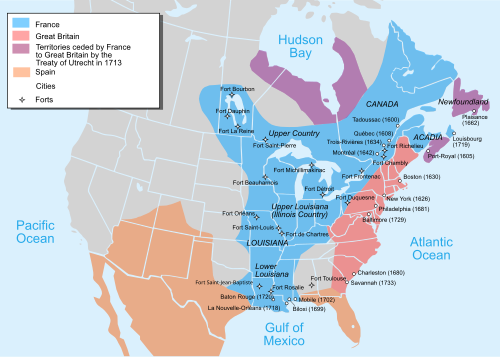
English, French and Spanish America as of 1750 |
Queen Anne's War (1702–1713) was one in a series of French and Indian Wars fought in North America involving the colonial empires of Great Britain, France, and Spain. The war was primarily a conflict between French, Spanish and English colonial ambitions for control of the North American continent while the War of the Spanish Succession was being fought in Europe. Each side drew in various Indigenous communities as allies, and it was fought on four fronts. The Treaty of Utrecht ended the war in 1713, following a preliminary peace in 1712. France ceded the territories of Hudson Bay, Acadia, and Newfoundland to Britain while retaining Cape Breton Island and other islands in the Gulf of St. Lawrence.
In 1717 the British Parliament made transportation to America a legal punishment for crimes.
From 1754 through 1763 Americans, as loyal subjects of the British Crown, helped the British fight the French and Indian Wars, known in Europe as the Seven Years' War. Native Americans fought on both sides of the war. The British, with help from the colonists, won New France from France.
After the French were defeated, the British taxed the colonies to pay for the cost of the war. The value to Britain of trade with the colonies rose from 500,000 pounds in 1700 to 2,800,000 pounds in 1770. The issue of taxation without representation later led to war.
In the Carolinas, whites were outnumbered by slaves and Indians. In the 1750s, there were 25,000 whites, 40,000 black slaves and 60,000 Creek, Cherokee, Choctaw and Chickasaw Indians. One white ruler of South Carolina wanted "to make Indians & Negros a checque upon each other lest by their Vastly Superior Numbers we should be crushed by one or the other." Laws were passed to prevent free blacks from traveling in Indian country. Treaties with Indian tribes contained clauses requiring the return of runaway slaves. South Carolina used black slaves to fight against Indians. Blacks ran away to Indian villages, and Creeks and Cherokees harbored them. In Florida there were three wars against the Seminoles, who harbored fugitive slaves.

|
| Benjamin Franklin |
Benjamin Franklin (1706-1790) was a statesman, author, publisher, scientist, inventor and diplomat. Born into a Boston family of modest means, Franklin had little formal education. He went on to start a successful printing business in Philadelphia and grew wealthy. Franklin was deeply active in public affairs in his adopted city. In 1731, he established a reading library that became the Library Company of Philadelphia. In 1743, he founded the American Philosophical Society to encourage the spirit of inquiry. In 1749, he provided the foundation for the University of Pennsylvania, and in 1751, he helped found Pennsylvania Hospital. He garnered acclaim for his experiments with electricity, among other projects. During the American Revolution, he served in the Second Continental Congress and helped draft the Declaration of Independence in 1776. He also negotiated the 1783 Treaty of Paris that ended the Revolutionary War (1775-83). In 1787, in his final significant act of public service, he was a delegate to the convention that produced the US Constitution.
In 1729, Franklin became the owner and publisher of a colonial newspaper, the Pennsylvania Gazette, which proved popular-and to which he contributed much of the content, often using pseudonyms. Franklin achieved fame and further financial success with Poor Richard's Almanack, which he published every year from 1733 to 1758. The almanac became known for its witty sayings including, "Early to bed and early to rise, makes a man healthy, wealthy and wise," "Fish and visitors stink in three days" and "Three may keep a secret if two of them are dead."
Benjamin Franklin invented the Franklin stove in 1742. His Pennsylvania stoves were made with slave labor. The Franklin stove provided more heat while using less fuel than other stoves. Franklin invented the lightning rod in 1749. Franklin observed that lightning strikes tended to hit metal objects and reasoned that he could therefore direct lightning through the placement of metal objects during an electrical storm. He used this knowledge to advocate the use of lightning rods: metal poles connected to wires directing lightning's electrical charge into the ground, thus saving wooden homes in cities like Philadelphia from catastrophic fires. He published his findings in 1751 in Experiments and Observations on Electricity. In 1751 Benjamin Franklin and Thomas Bond founded Pennsylvania Hospital, America's first hospital. In 1752 Franklin proved the electrical nature of lightning by flying a kite in a thunderstorm. The kite was attached to a wire that led to a key attached to a hemp string. The hemp string conducted electricity to the key. He stored the electric charge in a Leyden jar. Franklin also coined a number of electricity-related terms, including battery, charge and conductor. In addition to electricity, Franklin studied a number of other topics, including ocean currents, meteorology, causes of the common cold and refrigeration. Franklin invented bifocals in 1779. After 1767, he was associated with the Pennsylvania Chronicle, a newspaper known for its revolutionary sentiments and criticisms of the policies of the British Parliament and the Crown. He pioneered and was the first president of the Academy and College of Philadelphia, which opened in 1751 and later became the University of Pennsylvania. He was appointed deputy postmaster-general for the British colonies in 1753, which enabled him to set up the first national communications network. From 1785 to 1788, he served as President of Pennsylvania. At some points in his life, he owned slaves and ran "for sale" ads for slaves in his newspaper, but by the late 1750s, he began arguing against slavery, became an active abolitionist, and promoted the education and integration of African Americans into US society. Franklin and his cousin Timothy Folger share credit for Franklin's map of the Gulf Stream, which allowed faster shipping and trade.
In 1757, Franklin traveled to London as a representative of the Pennsylvania Assembly, to which he was elected in 1751. Over several years, he worked to settle a tax dispute and other issues involving descendants of William Penn (1644-1718), the owners of the colony of Pennsylvania. After a brief period back in the US, Franklin lived primarily in London until 1775. While he was abroad, the British government began, in the mid-1760s, to impose a series of regulatory measures to assert greater control over its American colonies. In 1766, Franklin testified in the British Parliament against the Stamp Act of 1765, which required that all legal documents, newspapers, books, playing cards and other printed materials in the American colonies carry a tax stamp. Although the Stamp Act was repealed in 1766, additional regulatory measures followed, leading to ever-increasing anti-British sentiment and eventual armed uprising in the American colonies.
Franklin returned to Philadelphia in May 1775, shortly after the Revolutionary War (1775-83) had begun, and was selected to serve as a delegate to the Second Continental Congress, America's governing body at the time. In 1776, he was part of the five-member committee that helped draft the Declaration of Independence, in which the 13 American colonies declared their freedom from British rule. That same year, Congress sent Franklin to France to enlist that nation's help with the Revolutionary War. In February 1778, the French signed a military alliance with America and went on to provide soldiers, supplies and money that proved critical to America's victory in the war. As minister to France starting in 1778, Franklin helped negotiate and draft the 1783 Treaty of Paris that ended the Revolutionary War.
Franklin used a number of pen names including Silence Dogood, Richard Saunders, Benevolus and Sidi Mehemet Ibraham. As Americanus Franklin responded to the British policy of sending felons to America with, "Such a tender parental concern in our Mother Country for the welfare of her children calls aloud for the highest returns of gratitude and duty," and wrote that the colonies must reciprocate. Franklin wrote, "In some of the uninhabited parts of these provinces, there are numbers of these venemous reptiles we call rattlesnakes, felon convicts fom the beginning of the world." According to Franklin, they "seem the most suitable returns for the human serpants sent us by our Mother Country." As an abolitionist Franklin wrote a satirical article as Sidi Mehemet Ibrahim justifying the enslavement of Christians. As Ibrahim he wrote, "If we cease our cruises against the Christians, how shall we be furnished with the commodities their countries produce and which are so necessary for us?" and "If we forbear to make slaves of their people, who in this hot climate are to cultivate our lands?" He continued, "Here they are brought into a land where the sun of Islamism gives forth its light and shines in full splendor, and they have an opportunity of making themselves acquainted with the true doctrine and thereby saving their immortal souls."
Franklin never said that the national symbol should be a turkey instead of an eagle. This false story began due to a letter Franklin wrote to his daughter criticizing the original eagle design for the Great Seal, saying that it looked more like a turkey. In the letter, Franklin wrote that the "Bald Eagle...is a Bird of bad moral Character. He does not get his Living honestly…[he] is too lazy to fish for himself." About the turkey, Franklin wrote that in comparison to the bald eagle, the turkey is "a much more respectable Bird, and withal a true original Native of America...He is besides, though a little vain & silly, a Bird of Courage."
Benjamin Franklin is often mistakenly credited with inventing Daylight Saving Time (DST), but he actually proposed ideas related to adjusting daily schedules to save on candle usage in a satirical essay. In 1784, Benjamin Franklin wrote a satirical letter to the editor of the Journal de Paris, where he humorously suggested that Parisians could save money on candles by waking up earlier to take advantage of natural sunlight. He observed that the sun rose early and proposed that people adjust their schedules accordingly. Franklin's suggestions included:
Taxing homeowners for every window with shutters that blocked sunlight.
Ringing church bells at sunrise to wake people up.
Firing cannons in the streets to ensure everyone was aware of the early morning light.
The actual idea of DST was first suggested by New Zealand entomologist George Vernon Hudson in 1895, who wanted to have more daylight in the evenings. This concept was later popularized by British builder William Willet in the early 20th century, who proposed a systematic approach to changing the clocks.
Even though Franklin owned a few house slaves, he became an abolitionist in his later years and came to believe in black equality. From London, Franklin supported the cause of black education in colonial American cities and attacked slavery anonymously in the print for the first time. The fictionalized "Conversations between an Englishman, a Scotchman, and an American," published in 1770, critiqued the institution and global slave trade. Franklin took a semi-public stance on slavery when circulating A Thought Concerning the Sugar Islands in 1782. In the article, Franklin denounced the numerous armed conflicts in Africa, the number of lives lost during these conflicts, the harsh conditions of transatlantic transportation, and the "numbers that die under the severities of slavery" itself. Given such brutality and violence, Franklin contended that even a morsel of sugar was tainted with blood. Almost 8 years spent with antislavery French thinkers, dedicated abolitionist friends, and other philosophes are credited with encouraging Franklin's eventual open censure of slavery and the continual shift of Franklin's personal views.
At eighty-one years old in 1787, he became the President of the Philadelphia Society for the Relief of Free Negroes Unlawfully Held in Bondage, which was also often referred to as the Abolition Society. The Abolition Society, which was formed by a group of abolitionist Quakers and Anthony Benezet in 1774, concentrated not only on abolishing slavery but also on helping enslaved people transition to a life of liberty. The organization was the first in America and encouraged the formation of abolitionist societies in other colonies.
In 1787, weeks before the start of the Constitutional Convention, Franklin signed a public antislavery appeal, which stated that "the Creator of the world" had made "of one flesh, all the children of men." It was believed that Franklin, like many revolutionary leaders, supported the idea that a nation built on the promise of inalienable rights acquired at birth could not remain true while enabling slavery.
In 1789, he wrote and published several essays supporting the abolition of slavery, including an Address to the Public, dated November 9th of that same year. In the address, the former slave owner wrote that the institution was an "atrocious debasement of human nature" and called for adequate resources to support emancipated people in society, such as education and employment. Furthermore, Franklin's last public act was to petition Congress on behalf of the society, requesting that they "cut the cancer of slavery out of the American body politic," and grant liberty to those unhappy men who alone in this land of freedom are degraded into perpetual bondage." The first Congress was also asked to "devise means for removing the Inconsistency from the Character of the American People," and to "promote mercy and justice toward this distressed Race." This petition calling for the abolition of slavery and an end to the slave trade was signed on February 3, 1790, just over two months before Franklin's death.
The petition was then introduced to the House and Senate on February 12th and 15th, 1790, respectively. It was immediately denounced by pro-slavery congressmen and ignited a heated debate in both branches of Congress. The House referred the petition to a select committee for further consideration, while the Senate took no action. On March 5th, 1790, the committee decided that the Constitution restrains Congress from prohibiting the importation or emancipation of slaves until 1808 and then tabled the petition. Despite such results, Franklin's final efforts still cement his transformation from master of slaves to outspoken abolitionist.
Many leaders of the American Revolution were slaveowners who thought that slavery was wrong, and saw democracy as the future. They wanted to put slavery in the past. Washington freed his slaves in his will and hoped for a gradual but peaceful end to slavery. Patrick Henry owned slaves but said he could not justify it. Benjamin Franklin owned house slaves but became an abolitionist in his later years. Jefferson was deeply in debt and could only afford to free a few of his slaves, all members of the Hemings family. Jefferson said that slavery was like having "a wolf by the ears," and that it wasn't safe to either keep it or let it go. However, Robert Carter III freed more than 500 of his slaves with what he called a "deed of gift" in 1791. In 1775 the English writer Samuel Johnson said, "How is it that we hear the loudest yelps for liberty among the drivers of negroes?"
George Washington was in the military when the British ruled America. Repeatedly passed over for promotions and snubbed by British-born officers for being unsophisticated, Washington fumed over being treated like a second-class citizen. In 1757, he complained in a letter to his commander, Robert Dinwiddie, "We cant conceive, that being Americans shoud deprive us of the benefits of British Subjects." Frustrated, the following year, he resigned his commission.
In 1761, a new king had taken the throne in England, and a new writ of assistance had to be approved by the Massachusetts Colony's Superior Court. However, the writs contained a general search warrant. For years, ships docking in Boston had smuggled items, especially molasses. The colonists feared the loss of profits from smuggling. The colonists decided to fight the writs. One of the two lawyers hired by the colonists was John Otis. In his argument against the writs, Otis included the line, "A man's home is his castle." Otis defeated the Crown's lawyers.
The Proclamation of 1763 forbade colonies from making land grants beyond the Appalachian continental divide. Americans were enraged at paying for the British army to keep them from taking land away from Native Americans.
In the years leading up to the Boston Massacre, British impressment of Americans and quartering of British troops in colonial buildings increased friction between Americans and the British. Also, the British took jobs away from some American mechanics, shopkeepers, ropemakers and others.
Americans demanded no taxation without representation. On March 22, 1765, the British Parliament passed the "Stamp Act" to help pay for British troops stationed in the colonies during the Seven Years' War. The act required the colonists to pay a tax, represented by a stamp, on various forms of papers, documents, and playing cards. It was a direct tax imposed by the British government without the approval of the colonial legislatures and was payable in hard-to-obtain British sterling, rather than colonial currency. Further, those accused of violating the Stamp Act could be prosecuted in Vice-Admiralty Courts, which had no juries and could be held anywhere in the British Empire.
The Townshend Acts were a series of acts passed in 1766 and 1767 placing an indirect tax on China, glass, lead, paints, paper, and tea, all of which had to be imported from Britain. This form of revenue generation was Townshend's response to the failure of the Stamp Act of 1765. The British thought colonists should help pay for expenses incurred by the British during the French and Indian War, which the British won in 1763. With the exception of necessities, such as fishing hooks and wire, New England merchants agreed not to import British goods for one year. New York followed suit in April, with an even more restrictive non-importation agreement.
In response to protests and boycotts, the British sent troops to occupy Boston and quell the unrest. By 1769, more than 2,000 British troops had arrived in Boston to restore order. On March 5, 1770, British soldiers shot into an angry mob, killing five American colonists in the Boston Massacre. Crispus Attucks, a mixed-race American, was the first casualty of the massacre. All of the Townshend Acts — except for the tax on tea — were repealed in April 1770. The tax on tea led to the Boston Tea Party of 1773, in which the Boston-based Sons of Liberty, some dressed as Native Americans, destroyed an entire shipment of tea in Boston Harbor. To quell resistance and punish the colonists — particularly the demonstrators in Boston — Parliament passed The Coercive Acts of 1774, which colonists referred to as the Intolerable Acts, which led to the American War of Independence from 1775 through 1783. To punish the rebels for their treason, Parliament passed the New England Restraining Act of 1775, banning locals from fishing in the Atlantic Ocean. Overnight, thousands of skilled mariners — men who spent their lives wrestling cod out of the North Atlantic — were out of a job. They left their work tools and ships behind, picked up weapons, and joined the siege of Boston alongside American farmers. The Intolerable Acts were:
The Hutchinson letters affair was an incident that increased tensions between the colonists of the Province of Massachusetts Bay and the British government prior to the American Revolution.
The Royal Governor, Thomas Hutchinson, declared that Parliament's sovereignty over the colonies was absolute. John Adams replied that the Colonial Charters granted the colonists sovereign legislative powers. Popular opinion sided with Adams. With the Governor's stature weakened, patriot leaders decided that it was the ideal time to release a packet of letters written by Hutchinson and Lieutenant Governor Andrew Oliver to officials in England. The letters were obtained by Benjamin Franklin and were sent to Sam Adams. Franklin said not to publish the letters. A longtime opponent of Hutchinson's, Samuel Adams narrowly followed Franklin's request, but managed to orchestrate a propaganda campaign against Hutchinson without immediately disclosing the letters. He informed the assembly of the existence of the letters, after which it designated a committee to analyze them. Strategic leaks suggestive of their content made their way into the press and political discussions, causing Hutchinson much discomfort. The assembly eventually concluded, according to John Hancock, that in the letters Hutchinson sought to "overthrow the Constitution of this Government, and to introduce arbitrary Power into the Province", and called for the removal of Hutchinson and Oliver. Hutchinson complained that Adams and the opposition were misrepresenting what he had written, and that nothing he had written in them on the subject of Parliamentary supremacy went beyond other statements he had made. The letters were finally published in the Boston Gazette in mid-June 1773, causing a political firestorm in Massachusetts and raising significant questions in England.
According to the historian Bernard Bailyn, Hutchinson's ruminations included the observation that it was impossible for colonists have the full rights they would have in the home country, essentially requiring an "abridgement of what are called English liberties." Oliver's letters specifically proposed for the governor's council, whose members were then elected by the assembly with the governor's consent, to be changed to one whose members were appointed by the crown.
Bostonians were outraged at the content of the published letters, burning Hutchinson and Oliver in effigy on Boston Common. The letters were widely reprinted throughout the British North American colonies, and acts of protest took place as far away as Philadelphia. The Massachusetts assembly and governor's council petitioned the Board of Trade for Hutchinson's removal. In the Privy Council hearing concerning Hutchinson's fate, in which the aftermath of the Boston Tea Party was also discussed, Franklin stood silently while he was lambasted by Solicitor General Alexander Wedderburn for his role in the affair. He was accused of thievery and dishonor, and called the prime mover in England on behalf of Boston's radical Committee of Correspondence. The Board of Trade dismissed Franklin from his post as colonial Postmaster General, and dismissed the petition for Hutchinson's removal as "groundless" and "vexatious." Parliament then passed the so-called "Coercive Acts", a package of measures designed to punish Massachusetts for the tea party. Hutchinson was recalled, and the Massachusetts governorship was given to the commander of British forces in North America, Lieutenant General Thomas Gage. Hutchinson left Massachusetts in May 1774, never to return. Andrew Oliver suffered a stroke and died in March 1774.
In 1775 there were battles around Lexington and Concord. The British tried to capture American stores of military equipment, and the Americans tried to move and hide stores of military equipment. The Americans were mostly successful, but some military equipment was seized by the British at Concord. Also, several riders set off to warn that the redcoats were coming. The most famous of these was Paul Revere, a patriot and silversmith. Paul Revere rode from Charlestown to Lexington to Concord. The warning was one lamp if by land, two if by sea. There were two lamps in a church, indicating that the British were coming by sea. These riders succeeded in setting off the American alarm system (guns, bells, drums and bugles) to let American militia know to fight the British. When the British captured Paul Revere, they asked what the gunfire meant. Paul Revere said the gunfire meant the British were about to be attacked. The British took Paul Revere's horse and rode off, leaving Paul Revere behind. It fell to fellow rider Samuel Prescott to complete the journey.
In 1775 there were battles at Bunker Hill and Breed's Hill, which would have been good positions for firing on the British. The British won those battles but at a very high casualty rate. The British went into Boston, and the Americans besieged Boston. The siege lasted for 11 months. Meanwhile, a group of American militiamen calling themselves the Green Mountain Boys, led by Ethan Allen and Benedict Arnold, captured the British Fort Ticonderoga. George Washington, the head of the Continental Army, ordered Henry Knox to bring mortars and 59 cannons weighing about 60 tons to Boston. Knox did so, moving them 300 miles in 56 days, and the cannons were placed on Dorchester Heights outside of Boston to prevent the British from getting food or supplies. The British General Howe saw that his soldiers were in an untenable position and moved them to British-owned Halifax, Nova Scotia. Americans reclaimed control of Boston.
In 1775 the British military commander in Virginia, Lord Dunmore, promised freedom to Virginia slaves who fought for the British. By the end of the war, an estimated 15,000 formerly enslaved people sought refuge with the British; some served in a military role, though the majority served in noncombatant roles. About 5,000 blacks fought for the Revolutionaries. At the end of the war many blacks fled to Nova Scotia, England, the West Indies and Africa for their freedom. Others lived in America as free blacks. In Boston they asked that state money be used to educate black children as well as white children. In Norfolk they asked to be allowed to testify in court. Peter Mathews, a black butcher, led other free blacks in Charleston in petitioning the legislature to repeal discriminatory laws against blacks. In 1780 seven blacks in Dartmouth, Massachusetts petitioned the legislature for a right to vote.
When "give me liberty or give me death" Patrick Henry heard about the British freeing American slaves, he organized slave patrols to keep slaves from joining the British. Henry was a slave owner. He later said he hoped that "future generations" would know what to do about slavery. While he called slavery "as repugnant to humanity as it is inconsistent with the Bible and destructive of liberty," he never freed any of his slaves. When explaining why he owned slaves, Henry said, "I am drawn along by the general inconvenience of living here without them," and admitted, "I will not, I cannot justify it."
In 1776 the British economist Adam Smith published An Inquiry into the Nature and Causes of the Wealth of Nations. His book claimed that competition would set fair wages and prices as if by an "invisible hand," but that monopolies were a threat to such a system. He said that "It is not from the benevolence of the butcher, the brewer or the baker, that we expect our dinner, but from their regard to their own interest. We address ourselves not to their humanity but to their self-love, and never talk to them of our own necessities but of their advantages." Smith said to judge a society by whether it supplied people "with all the necessaries and conveniences of life." He said that "No society can surely be flourishing and happy, of which the far greater part of the members are poor and miserable." Smith opposed mercantilism, which was based on trade surpluses and hoarding gold. He argued that such trade restrictions would become "oppressive and insupportable" for the American colonies as their economic development accelerated. He thought that trade deficits were not necessarily bad and that trade expands the division of labor, increasing productivity.
In 1777, Washington ordered his soldiers to get vaccinated against smallpox. He said,
Finding the Small pox to be spreading much and fearing that no precaution can prevent it from running through the whole of our Army, I have determined that the troops shall be inoculated. This Expedient may be attended with some inconveniences and some disadvantages, but yet I trust in its consequences will have the most happy effects. Necessity not only authorizes but seems to require the measure, for should the disorder infect the Army in the natural way and rage with its usual virulence we should have more to dread from it than from the Sword of the Enemy.
The British seized New York City. Americans were defeated at the Battle of Quebec, but won at Saratoga. The British General John Burgoyne attacked the American General Horatio Gates near Albany, New York. There were two battles at Saratoga. At the first battle at Freeman's Farm the British won, but had twice the casualty rate of the Americans. At the battle of Bemis Heights the Americans scored a decisive victory. Benedict Arnold played an important role in this victory. This victory was important enough that the French helped the Americans throughout the rest of the war. The British were aided by Hessians, who were paid German mercenaries. Also, the British freed American slaves who fought for the British. The British seized control of Philadelphia. George Washington, after crossing the Delaware, defeated the British at Trenton and Princeton. The Americans were defeated at Savannah but won battles at King's Mountain, Cowpen and Yorktown. The defeat of Cornwallis at Yorktown, with the help of the French navy, won America's independence in 1781. The British continued to fight France and Spain, so our independence wasn't officially recognized until the Treaty of Paris in 1783.
Some colonists were Loyalists who supported the British. These included slaves who gained their freedom by fighting for the British and some poor whites and others. In the Lower South Washington's military commander, Nathanael Greene, dealt with disloyalty by concessions to some and harsh treatment of others. In one raid on Loyalists, upwards of one hundred were killed. Greene did this "to strike terror into our enemies and give spirit to our friends."
Although Benedict Arnold did a lot to help America win its independence, in 1780 he committed treason and sided with the British.
The Fairfax Resolves were a set of resolutions adopted by a committee in Fairfax County in the Colony of Virginia on July 18, 1774, in the early stages of the American Revolution. Written at the behest of George Washington and others, they were authored primarily by George Mason. The resolutions rejected the British Parliament's claim of supreme authority over the American colonies. More than thirty counties in Virginia passed similar resolutions in 1774, including the Loudoun Resolves issued in June, "but the Fairfax Resolves were the most detailed, the most influential, and the most radical."
The short document provided the following:
|
| Declaration of Independence |
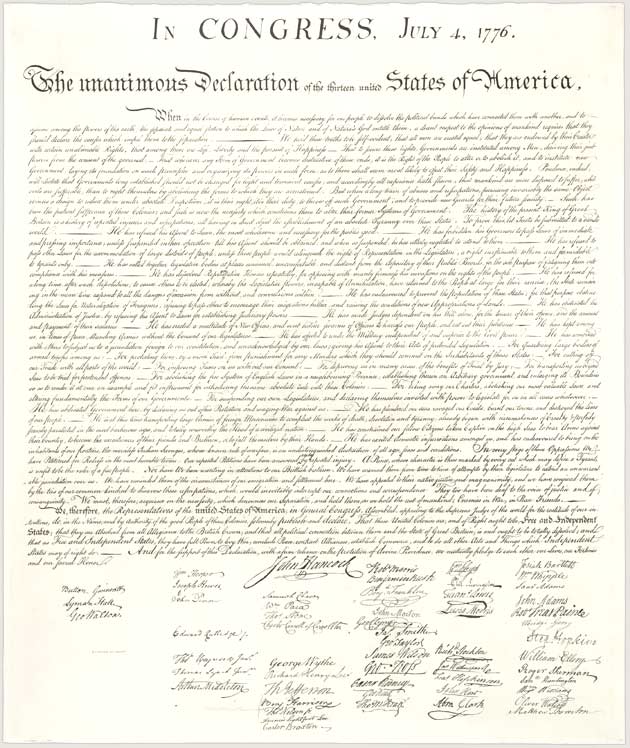
In 1776 Thomas Jefferson wrote our Declaration of Independence. The Continental Congress made 86 changes to Jefferson's draft. Among them were the deletion of a condemnation of the British people and a reference to "Scotch & foreign mercenaries" (there were Scots in the Congress). The Declaration listed 27 grievances against the king. One of them was, "He has endeavoured to prevent the population of these states; for that purpose obstructing the laws for naturalization of foreigners; refusing to pass others to encourage their migrations hither, and raising the conditions of new appropriations of lands." The colonists were eager to expand their ranks, which they understood to be essential to the American future. In 1773, however, they lost the right to naturalize immigrants. Another complaint was, "He has dissolved representative houses repeatedly, for opposing with manly firmness his invasions on the rights of the people." When the Massachusetts assembly seemed in danger of passing laws that irked the king, the royal governor forced the legislature into recess or removed it from its Boston location. If it could not meet, it could not vote. Yet another complaint was, "He has made judges dependent on his will alone, for the tenure of their offices, and the amount and payment of their salaries." When the crown decided to pay colonial judges directly, planting the judiciary beyond the people's control, the news arrived "like thunder in the ears," as Samuel Adams put it. Those charged with dispensing impartial justice became, Adams argued, pawns of the king. Other complaints were "He has kept among us, in times of peace, standing armies without the consent of our legislatures" and "For quartering large bodies of troops among us." British soldiers killed Americans at the Boston Massacre. Also, "He has plundered our seas, ravaged our coasts, burnt our towns, and destroyed the lives of our people." Like Common Sense, the Declaration said that we should seek independence. In part, it said:
We hold these truths to be self evident, that all men are created equal, that they are endowed by their creator with certain unalienable rights, that among these are life, liberty, and the pursuit of happiness. That to secure these rights governments are instituted among men, deriving their just powers from the consent of the governed. That when any form of government becomes destructive of these ends it is the right of the people to alter or to abolish it ...
The Declaration ended with, "we mutually pledge to each other our Lives, our Fortunes and our sacred Honor." The signers of the Declaration did indeed risk their lives in signing the document.
Since 1776, there have been hundreds of declarations of independence issued around the world, most ignored, but many successful in securing independence — that is, recognized statehood — for a people or nation breaking away from another authority. Over half of the states now represented at the United Nations have a foundational document they call a declaration of independence or something similar: in the Spanish-speaking world, they are "actas de independencia," in the francophone world, "actes d'independence." The Declaration encouraged Antonio de Nariño and Francisco de Miranda to strive toward overthrowing the Spanish empire in South America, and it was quoted by the marquis de Mirabeau during the French Revolution.
John Locke spoke of a right to life, liberty and property. Jefferson changed this to "life, liberty, and the pursuit of happiness." Even if Jefferson borrowed ideas from Age of Enlightenment thinkers in Europe, many people remember Jefferson's words. It was Jefferson who inspired Abraham Lincoln, Elizabeth Cady Stanton, Frederick Douglass, Martin Luther King, Ho Chi Minh and many others. At Alton, Illinois Lincoln said of Jefferson's Declaration,
They meant to set up a standard maxim for the free society which should be familiar to all,-constantly looked to, constantly labored for, and even, though never perfectly attained, constantly approximated, and thereby constantly spreading and deepening its influence, and augmenting the happiness and value of life to all people, of all colors, everywhere.
Lincoln also said the following about Jefferson's declaration,
I should like to know if taking this old Declaration of Independence, which declares that all men are equal upon principle, and making exceptions to it — where will it stop? If one man says it does not mean a Negro, why does not another say it does not mean some other man? If that Declaration is not ... true, let us tear it out! [Cries of "no, no"] Let us stick to it then, let us stand firmly by it then.
In 1848, at Seneca Falls, New York, Elizabeth Cady Stanton read a Declaration of Sentiments that called on women to demand their rights, including the right to vote, among eleven other rights. Lucretia Mott was the other suffragette who organized the event. The Declaration was inspired by that of Jefferson, and read,
When in the course of human events, it becomes necessary for one portion of the family of man to assume among the people of the earth a position different from that they have hitherto occupied ...
We hold these truths to be self-evident: that all men and women are created equal; that they are endowed by their Creator with certain inalienable rights, that among these are life, liberty and the pursuit of happiness. ...
The history of mankind is a history of repeated injuries and usurpations on the part of man toward woman, having in direct object the establishment of an absolute tyranny over her. To prove this, let facts be submitted to a candid world. ...
Frederick Douglass delivered the following speech about Jefferson's Declaration in Corinthian Hall, Rochester, New York on July 5th, 1852:
What, to the American slave, is your 4th of July? I answer: a day that reveals to him, more than all other days in the year, the gross injustice and cruelty to which he is the constant victim. ... The existence of slavery in this country brands your republicanism a sham, your humanity a base pretense, and your Christianity a lie. It destroys your moral power abroad; it corrupts your politicians at home. It saps the foundation of religion; it makes your name a hissing, and a bye-word to a mocking earth. It is the antagonistic force in your government, the only thing that seriously disturbs and endangers your Union. It fetters your progress; it is the enemy of improvement, the deadly foe of education; it fosters pride; it breeds insolence; it promotes vice; it shelters crime; ... I, therefore, leave off where I began, with hope. While drawing encouragement from the Declaration of Independence, the great principles it contains, and the genius of American institutions, my spirit is also cheered by the obvious tendencies of the age
In 1945 Ho Chi Minh issued a Declaration of Independence after the Japanese were defeated. It included the following:
All men are created equal. They are endowed by their Creator with certain inalienable rights; among these are Life, Liberty, and the pursuit of Happiness."
Martin Luther King Jr. said,
I still have a dream. It is a dream deeply rooted in the American dream. I have a dream that one day this nation will rise up and live out the true meaning of its creed: We hold these truths to be self-evident, that all men are created equal.
King also said,
When the architects of our republic wrote the magnificent words of the Constitution and the Declaration of Independence, they were signing a promissory note to which every American was to fall heir. This note was a promise that all men yes, black men as well as white men would be guaranteed the unalienable rights of life, liberty and the pursuit of happiness.
However, although Jefferson mentioned a right to liberty, he lived and died as a slave owner.
On July 4, 1776 the final text of the Declaration was adopted by the Second Continental Congress. On August 2, 1776 most delegates signed the parchment in the Assembly Room of Pennsylvania's State House (now Independence Hall) between late 1776 and early 1777. A few delegates who were absent on August 2 added their signatures later; some names were even added in 1778.
 |
| John Locke Treatise |
The central doctrines of the Enlightenment were individual liberty, representative government, the rule of law and religious freedom, in contrast to an absolute monarchy or single party state and the religious persecution of faiths other than those formally established and often controlled outright by the State. Characterized by an emphasis on reason, empirical evidence and the scientific method, the Age of Enlightenment promoted progress and natural rights. Its thinkers advocated for constitutional government, the separation of church and state, and the application of rational principles to social and political reform. The Enlightenment emerged from and built upon the Scientific Revolution of the 16th and 17th centuries, which had established new methods of empirical inquiry.
Ideas for forming a representative democracy came from people inspired by the Enlightenment, such as Thomas Paine, John Locke, Jean-Jacques Rousseau and Charles Montesquieu. The Magna Carta represented the first step away from the divine right of kings. The world at that time was ruled by kings, queens, czars and other dictators. In Europe, status was based on class and nobility. India had a caste system, and women had few rights in any country. Serfs were bound to the soil, and slavery existed in many countries.
Thomas Paine was born in England and immigrated to America in 1774. On January 10, 1776 Paine published Common Sense, which said that the Americans should stop seeking to reconcile with the British and instead fight for independence. Paine also said that Americans should create a better form of government than monarchies. He spelled out all the problems caused by monarchies from the ancient Israelites to English kings and queens, and the fact that monarchies were based not on competence but on heredity. He said that monarchs are "exceedingly ridiculous" and that one king was "nothing better than the principal ruffian of some restless Gang." He said that "A government of our own is our natural right" and "it is infinitely wiser and safer, to form a constitution of our own in a cool and deliberate manner, while we have it in our power, than to trust such an interesting event to time and chance." He said that "The cause of America is in a great measure the cause of all mankind." He said that "any submission to, or dependence on, Great Britain, tends directly to involve this Continent in European wars and quarrels." Paine, like the Declaration of Independence, said that all were created equal in a state of nature. As Paine said, "all men being originally equals, no one by birth could have a right to set up his own family in perpetual preference to all others forever." Paine's tract was read out loud in American taverns and other public meeting places. It was a bestseller. Paine was against slavery as well as for democracy.
In The American Crisis Paine wrote, "THESE are the times that try men's souls. The summer soldier and the sunshine patriot will, in this crisis, shrink from the service of his country; but he that stands it NOW, deserves the thanks of man and woman."
John Locke, in his 1689 Second Treatise of Government, described man in the state of nature as being among people having equal rights. As Locke wrote,
To properly understand political power and trace its origins, we must consider the state that all people are in naturally. That is a state of perfect freedom of acting and disposing of their own possessions and persons as they think fit within the bounds of the law of nature. People in this state do not have to ask permission to act or depend on the will of others to arrange matters on their behalf. The natural state is also one of equality in which all power and jurisdiction is reciprocal and no one has more than another. It is evident that all human beings-as creatures belonging to the same species and rank and born indiscriminately with all the same natural advantages and faculties-are equal amongst themselves. They have no relationship of subordination or subjection unless God (the lord and master of them all) had clearly set one person above another and conferred on him an undoubted right to dominion and sovereignty.
Locke also believed that all men have a right to life, liberty and property. As Locke wrote,
The state of nature has a law of nature to govern it, which obliges every one: and reason, which is that law, teaches all mankind, who will but consult it, that being all equal and independent, no one ought to harm another in his life, health, liberty, or possessions… (and) when his own preservation comes not in competition, ought he, as much as he can, to preserve the rest of mankind, and may not, unless it be to do justice on an offender, take away, or impair the life, or what tends to the preservation of the life, the liberty, health, limb, or goods of another.
Since God didn't choose to set one person above another, he believed in equal rights. He saw the alternative to the natural state as not political dictatorship/tyranny but a government that has been established with consent of the people and protection of basic human rights to life, liberty, and property under the rule of law.
The Social Contract is a 1762 French-language book by the Genevan philosopher Jean-Jacques Rousseau. It opens with, "Man is born free; and everywhere he is in chains." The book theorizes about how to establish legitimate authority in a political community that is compatible with individual freedom. The Social Contract helped inspire political reforms or revolutions in Europe, especially in France. The Social Contract argued against the idea that monarchs were divinely empowered to legislate. Rousseau asserts that only the general will of the people has the right to legislate, for only under the general will can the people be said to obey only themselves and hence be free.
Charles Montesquieu was a French jurist, historian, and political philosopher. He is the principal source of the theory of separation of powers, which is implemented in many constitutions throughout the world. He is also known for propagating the term despotism in the modern political lexicon. Montesquieu identifies three main forms of government, each supported by a social "principle": monarchies (free governments headed by a hereditary figure, e.g. king, queen, emperor), which rely on the principle of honor; republics (free governments headed by popularly elected leaders), which rely on the principle of virtue; and despotisms (unfree), headed by despots which rely on fear. The free governments are dependent on constitutional arrangements that establish checks and balances. Montesquieu's anonymously published The Spirit of Law, first translated into English by Thomas Nugent in a 1750 edition, was received well in both Great Britain and the American colonies, where it influenced the Founding Fathers of the United States in drafting the US Constitution.
As Montesquieu wrote:
When in the same person or in the same body of magistracy the legislative authority is combined with the executive authority, there is no freedom, because one can fear lest the same monarch or the same senate make tyrannical laws in order to carry them out tyrannically.
Again there is no freedom if the authority to judge is not separated from the legislative and executive authorities. If it were combined with the legislative authority, power over the life and liberty of the citizens would be arbitrary, for the judge would be the legislator. If it were combined with the executive authority, the judge could have the strength of an oppressor. All would be lost if the same man or the same body of principals, or of nobles, or of the people, exercised these three powers: that of making laws, that of executing public resolutions, and that of judging crimes or disputes between individuals.
— Montesquieu, The Spirit of Law, XI, 6.
 |
| Virginia Declaration of Rights |
The Virginia Declaration of Rights that members of the Fifth and last of the Virginia Revolutionary Conventions unanimously adopted on June 12, 1776, was drafted by George Mason and revised by others. It included the assertion "That all Men are by nature equally free and Independent and have certain inherent Rights of which when they enter into a state of Society they cannot by any compact deprive or divest their Posterity namely the enjoying of Life and liberty with the means of acquiring and possessing property and pursuing and obtaining happiness and Safety." The convention amended Mason's original language and added “when they enter into a state of Society” so as to exclude Virginia's enslaved population. The fundamental principles of government included the sovereignty of the people; the right of revolution; that public offices are not hereditary; that people should elect their own representatives in regularly scheduled elections; separation of executive, legislative, and judicial powers; no taxation without representation; that no person had a right to suspend the operation of the laws, as the king and royal governors had done during the colonial period; and declared that only a despotic government would restrain freedom of the press. Several of the provisions had origins in the English Bill of Rights of 1689 or even so far back in time as the Magna Carta of 1215. They included that people had a right to jury trials in civil and criminal cases; that no person could be compelled to testify against himself in a criminal proceeding; prohibited excessive bail, cruel and unusual punishments, and the issuance of general warrants; and that the militia be under civilian control. On freedom of religion it said,
That religion, or the duty which we owe to our Creator, and the manner of discharging it, can be directed only by reason and conviction, not by force or violence, and therefore all men are equally entitled to the free exercise of religion, according to the dictates of conscience; and that it is the mutual duty of all to practice Christian forbearance, love, and charity towards each other.
During the Revolutionary period, several other states borrowed or adapted language or provisions from the Virginia declaration for their own state declarations or bills of rights. James Madison drew on it and other documents when he drafted the constitutional amendments that he introduced in 1789 and that in 1791 became the American Bill of Rights. French revolutionaries also used it when they adopted their Déclaration des Droits de L'Homme et du Citoyen, the Declaration of the Rights of Man and Citizen, in 1789.
The Magna Carta or 'Great Charter' was an agreement imposed on King John of England on June 15, 1215 by rebellious barons in order to limit his power and prevent arbitrary royal acts like land confiscation and unreasonable taxes. Henceforward, the king would have to consult a defined body of laws and customs before making such declarations. The Magna Carta ensured that all freemen were protected from royal officers and had the right to a fair trial. Consequently, the charter became a symbol of the rule of law as the ultimate sovereign. In 13th-century England "freemen" constituted less than 25 percent of the population and, in any case, the barons were not concerned with them but rather with their own position. The primary aim of the Magna Carta, then, was to ensure the king did not impinge on the rights of feudal lords. However, the Magna Carta was the first step away from the divine right of kings. This idea started out small but grew over time. When English nobles demanded their rights against the king, other people also wanted rights.
Women had fewer rights than men. Married women were subject to coverture and lost independent legal identity, with their legal existence effectively merged into their husband's. Mid and late 19th century acts reduced coverture. Unmarried women could own property, enter contracts, sue and be sued, make wills, and run businesses until marriage altered those rights. The reason Martha Washington controlled her dower slaves was because of a will that was executed before her marriage. Inheritance laws changed after the Revolution to favor equal inheritance among children rather than primogeniture, which benefited daughters on paper. Property control usually passed to husbands on marriage; married women's separate property was limited unless protected by special arrangements such as prenuptial settlements or trusts. Single and widowed women commonly worked as artisans, shopkeepers, or in other trades permitted to non‑married people; married women often worked within household production but had little recognized economic autonomy. Anne Hutchinson held religious meetings at her home in Boston, and was banished from the colony for heresy. Abigail Adams, the wife of John Adams, wrote to her husband the following,
... in the new code of laws which I suppose it will be necessary for you to make, I desire you would remember the ladies, and be more generous to them than your ancestors. Do not put such unlimited power in the hands of husbands. Remember, all men would be tyrants if they could. If particular care and attention are not paid to the ladies, we are determined to foment a rebellion, and will not hold ourselves bound to obey the laws in which we have no voice of representation.
The English conservative Edmund Burke wrote in his Reflections on the Revolution in France that "a woman is but an animal, and an animal not of the highest order." Thomas Paine wrote in favor of rights for women, as did the English feminist Mary Wollstonecraft in her A Vindication of the Rights of Women.
The Young Lady's Book of 1830 read, "... in whatever situation of life a woman is placed from her cradle to her grave, a spirit of obedience and submission, pliability of temper, and humility of mind, are required from her."
Shays' Rebellion was a series of violent attacks on courthouses and other government properties in Massachusetts that began in 1786 and led to a full-blown military confrontation in 1787. The rebels were mostly ex-Revolutionary War soldiers-turned farmers who opposed state economic policies causing poverty and property foreclosures. The rebellion was named after Daniel Shays, a farmer and former soldier who fought at Bunker Hill and was one of several leaders of the insurrection.
The farmers who fought in the Revolutionary War had received little compensation, and by the 1780s many were struggling to make ends meet. Businesses in Boston and elsewhere demanded immediate payment for goods that farmers had previously bought on credit and often paid off through barter. There was no paper money in circulation and no gold or silver to be accessed by the farmers to settle these debts. At the same time, Massachusetts residents were expected to pay higher taxes than they had ever paid to the British in order to assure that Governor James Bowdoin's business associates would receive a good return on their investments. With no means to move their crops and make money to pay off debts and taxes, Boston authorities began to arrest the farmers and foreclose on their farms.
In several towns, judges were blocked from holding court by crowds of hundreds of armed men. Shays and other leaders made plans to raid the federal arsenal in Springfield to procure weapons. On January 25, 1787, 1,200 men approached the arsenal with guns, clubs and pitchforks. General Shepard predicted the assault and was waiting at the arsenal. Shepard believed the insurgents planned to overthrow the government. As they approached the arsenal, shots were fired at Shays and his men, leaving two rebels dead and 20 wounded. The rest retreated to Chicopee.
The Boston legislature passed the Disqualification Act banning rebels from serving on juries, holding public office, voting or working as schoolmasters, innkeepers and liquor salesmen for three years. By the summer of 1787, many participants in the rebellion received pardons from newly-elected Governor John Hancock. The new legislature placed a moratorium on debts and cut taxes, easing the economic burden the rebels were struggling to overcome.
Shays' Rebellion was one of the largest, but not the only, rebellion of the poor against the rich. Ebenezer MacIntosh led a mob that destroyed the home of rich Boston merchant Andrew Oliver. Another mob attacked the home of Thomas Hutchinson, who was among the rich elite who ruled the colonies in the name of England. They smashed the house with axes, drank the wine in his wine cellar and looted the house. There were impressment riots in New York and Newport, Rhode Island. From 1766 to 1771 the Regulators of North Carolina rebelled against the collection of taxes and the seizing of land from tax delinquents. In 1779 a militia attacked the house of Revolutionary leader James Wilson, who opposed price controls and wanted a more conservative government than the one created by the Pennsylvania Constitution of 1776. Some of George Washington's soldiers rebelled because of poor pay. Pennsylvania troops near Morristown, New Jersey and soldiers in Trenton, New Jersey and Philadelphia, Pennsylvania mutinied.

|
| Northwest Territory |
In the 1783 Treaty of Paris, which formally ended the American Revolutionary War, the British ceded the Northwest Territory (an area which includes a large part of the modern day Midwest) to the United States. The Confederation Congress passed the Northwest Ordinance of 1787. Thomas Jefferson wrote the legislation, which was later modified. It spelled out rules for the Northwest Territory, including a ban on slavery. The ordinance also includes rights that were later added to the Bill of Rights in the Constitution. Legal and property rights were enshrined, religious tolerance was proclaimed, and since "Religion, morality, and knowledge, being necessary to good government and the happiness of mankind, schools and the means of education shall forever be encouraged." The right of habeas corpus was written into the charter, as were freedom of religion and bans on excessive fines and cruel and unusual punishment. Trial by jury and a ban on ex post facto laws were also rights that were recognized.
The Articles of Confederation, officially the Articles of Confederation and Perpetual Union, served as the nation's first frame of government during the American Revolution. It was debated by the Second Continental Congress at present-day Independence Hall in Philadelphia between July 1776 and November 1777, was finalized by the Congress on November 15, 1777, and came into force on March 1, 1781, after being ratified by all 13 colonial states.
The limited powers that the articles granted to the national government reflected the lack of consensus between states. The government designed in the articles lacked any strong executive authority and did not have a national judiciary. Additionally, the national legislature, which the articles referred to as a "league of friendship," functioned less like a representative organ of the people at large than a council of state governments. The articles created a single-chamber Congress in which each state cast one vote.
A central and guiding principle of the Articles was the establishment and preservation of the independence and sovereignty of the original 13 states. The Articles consciously established a weak confederal government. Hostility to executive authority, cultivated by the colonies' royal governors, resulted in a president elected by and answerable to the legislature. Opposition to Parliament's attempts to raise revenue without representation caused the Continental Congress to ensure that, under the Articles, the national government had no direct power to tax. The Articles required a supermajority of nine states for many decisions; amendments to this first constitution required the states' unanimous consent.
The limitations on the central government in assembling delegates, raising funds, and regulating commerce made it difficult for the Confederation Congress to govern. As the government's weaknesses became apparent, several prominent political thinkers began asking for changes to the Articles that would strengthen the powers afforded to the central government.
In September 1786, some states met to address interstate protectionist trade barriers between them. Shortly thereafter, as more states became interested in meeting to revise the Articles, a meeting was set in Philadelphia on May 25, 1787. This became the Constitutional Convention. On March 4, 1789, the government under the Articles was replaced with the federal government under the Constitution. The new Constitution provided for a much stronger federal government by establishing a chief executive (the president), courts, and taxing powers.
The Anti-Federalists were against the ratification of the Constitution for many reasons. The Anti-Federalists believed that the Constitution, as drafted, would lead to a loss of individual liberties, an erosion of state sovereignty, and the potential for the rise of tyranny. They advocated for a more decentralized form of government with greater protections for individual rights and stronger representation for the states. Principally, they were afraid that the national government would be too robust and would, thus, threaten states and individual rights. They had the following concerns:
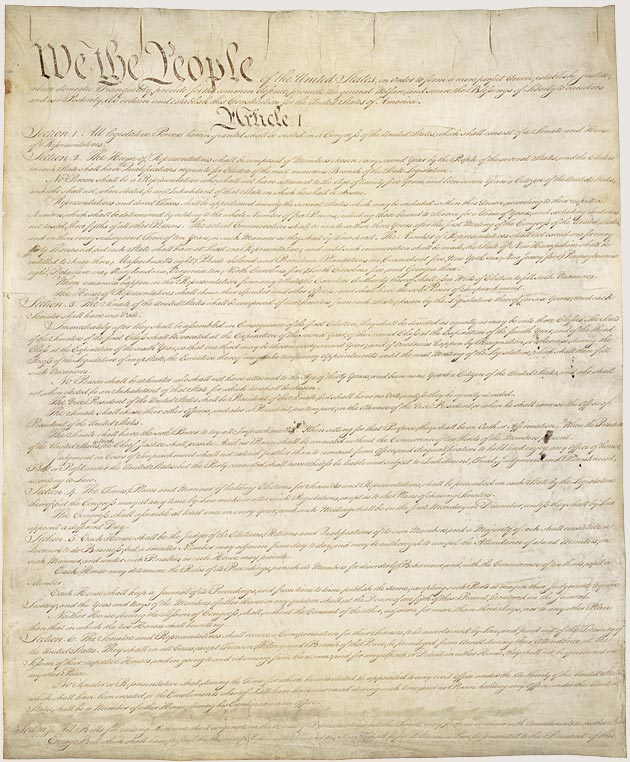 |
| US Constitution |
In 1783, we gained our independence, but still didn't have a fully functioning government. Under the Articles of Confederation, there were 13 very disunited colonies. Washington supported plans to replace the Articles of Confederation with the Constitution. Americans realized the need for a government that could function without being too strong for the liberties of the people. Shays' Rebellion showed the need for a government that could defend itself.
Our Constitution was written in 1787, ratified in 1788 and went into effect in 1789. The ancient Greek city-state of Athens was a direct democracy where every citizen could vote on every law. However, it was thought that direct democracies could exist only on a small scale. So the people who wrote our Constitution devised a representative form of democracy, where we vote for representatives who in turn write laws. As Benjamin Franklin said when asked what kind of government they would get, "a republic, if you can keep it." Our Constitution was new and experimental. No one was sure if it would succeed or fail.
In contrast to the articles, the proposed Constitution included uniform national commercial regulation, monetary controls such as the exclusive right of the national government to issue legal tender, augmented executive powers to determine foreign policy and an overarching federal court structure. It also included an explicit national power to suppress uprisings.
The Federalist Papers is a collection of 85 articles and essays written by Alexander Hamilton, James Madison, and John Jay under the collective pseudonym "Publius" to promote the ratification of the Constitution of the United States. The Federalist Papers were based on the belief that representative democracies can exist on the large scale of the Union. It argued that a large Union would prevent local passions from causing trouble, avoid wars when possible and wage war more effectively when necessary. Also, it was thought that a large Union would have advantages in trade and foreign diplomacy.
In Federalist No. 10, Madison discusses the means of preventing rule by majority faction and advocates a large, commercial republic. This is complemented by Federalist No. 14, in which Madison takes the measure of the United States, declares it appropriate for an extended republic, and concludes with a memorable defense of the constitutional and political creativity of the Federal Convention.
In Federalist No. 84, Hamilton makes the case that there is no need to amend the Constitution by adding a Bill of Rights, insisting that the various provisions in the proposed Constitution protecting liberty amount to a "bill of rights." Federalist No. 78, also written by Hamilton, lays the groundwork for the doctrine of judicial review by federal courts of federal legislation or executive acts. Federalist No. 70 presents Hamilton's case for a one-man chief executive. In Federalist No. 39, Madison presents the clearest exposition of what has come to be called "Federalism." In Federalist No. 51, Madison distills arguments for checks and balances in an essay often cited for its justification of government as "the greatest of all reflections on human nature."
In Federalist No. 51, James Madison wrote,
Ambition must be made to counteract ambition. The interest of the man must be connected with the constitutional rights of the place. It may be a reflection on human nature, that such devices should be necessary to control the abuses of government. But what is government itself, but the greatest of all reflections on human nature? If men were angels, no government would be necessary. If angels were to govern men, neither external nor internal controls on government would be necessary. In framing a government which is to be administered by men over men, the great difficulty lies in this: you must first enable the government to control the governed; and in the next place oblige it to control itself.
Madison was describing the need for checks and balances to prevent one branch of government from having too much power. These checks and balances are between the legislative, executive and judicial branches of government. The president is at the head of the executive branch, along with members of his cabinet. The legislative branch was the result of a compromise between large-population states and small-population states. Under the Virginia Plan proposed by James Madison, large population states wanted representation to be based on population, as per the census. Under the New Jersey Plan proposed by William Paterson, small-population states wanted every state to get equal representation. So the compromise based representation in the House of Representatives on population, but every state gets two Senators, regardless of population. Senators serve six-year terms, and Representatives serve two-year terms. This compromise was called the Connecticut Compromise or Great Compromise.
In Federalist 10, Madison argued that faction is "sown in the nature of man." Similarly, in Federalist 6, Hamilton rejected the commonly held idea that republics were automatically peaceful. Instead, he argued, political leaders and states were driven by ambitions and jealousies, which he saw as a characteristic shortcoming of the government under the Articles of Confederation as well as a law of nature governing relations between nations. Hamilton wrote that if the states remained disunited, then "the subdivisions into which they might be thrown would have frequent and violent contests with each other." To argue otherwise, he wrote, would be "to forget that men are ambitious, vindictive, and rapacious." Consequently, as Hamilton asserted in Federalist 15, governments must have effective coercive authority to enforce laws because they cannot rely solely on the goodwill and civic virtue of their citizens: "If there be no penalty annexed to disobedience, the resolutions or commands which pretend to be laws will, in fact, amount to nothing more than advice or recommendation." Ultimately, the defense of the Constitution provided by the Federalist Papers sought to frame the new government in terms of a skeptical view of humanity that recognized what Madison called "a degree of depravity in mankind." They also asserted that constitutional design and balanced government could control these dangerous impulses. As Madison added, "There are other qualities in human nature which justify a certain portion of esteem and confidence."
John Adams warned against a tyrannical majority, arguing against government by a single unicameral elected body. Writing in defense of the Constitution in March 1788, Adams referred to "a single sovereign assembly, each member…only accountable to his constituents; and the majority of members who have been of one party" as a "tyranny of the majority," attempting to highlight the need instead for "a mixed government, consisting of three branches." Constitutional author James Madison presented a similar idea in Federalist 10, citing the destabilizing effect of "the superior force of an interested and overbearing majority" on a government, though the essay as a whole focuses on the Constitution's efforts to mitigate factionalism generally. The idea of a tyrannical majority was later mentioned by John Stuart Mill in On Liberty and by Alexis de Tocqueville in Democracy in America volume 1 and volume 2.
The Federalist Papers are at:
The preamble to our Constitution reads:
"We the people of the United States, in order to form a more perfect union, establish justice, insure domestic tranquility, provide for the common defense, promote the general welfare, and secure the blessings of liberty to ourselves and our posterity, do establish and ordain this Constitution for the United States of America."
The Constitution also mentions a Supremacy Cause and a Commerce Clause. Article VI Clause 2, the Supremacy Clause, states:
This Constitution, and the Laws of the United States which shall be made in Pursuance thereof; and all Treaties made, or which shall be made, under the Authority of the United States, shall be the supreme Law of the Land; and the Judges in every State shall be bound thereby, any Thing in the Constitution or Laws of any State to the Contrary notwithstanding.
Article I Section 8 Clause 3, the Commerce Clause, states:
[The Congress shall have Power] To regulate Commerce with foreign Nations, and among the several States, and with the Indian Tribes;
Our Constitution inspired many other countries throughout the globe. However, no other country thought to copy our Electoral College. The Electoral College sometimes allows the loser of the popular vote to win the White House. At first, only rich white men could vote, but later poor white men, women and blacks won the right to vote.
In 1787 James Wilson wrote "We the People" into his draft — the first full draft — of the Constitution. Wilson believed that everyday people should vote directly for the presidency of the United States, which put him at odds with James Madison and John Adams. The turbulent history of popular sovereignty concerned many of the first architects of the United States. So too did Shays' Rebellion. "The evils we experience," the Constitutional Convention delegate Elbridge Gerry concluded several months later, "flow from the excess of democracy." The Connecticut delegate Roger Sherman said, "The people should have as little to do as may be about the government." To survive, such voices contended, the fledgling American republic needed layers of separation between the nation's citizenry and the highest offices in the land. Thus, under the original Constitution of 1787, state legislatures — not the people of the states themselves — were tasked with electing the two senators who represented them. And yet when his preference for a directly elected president was rejected during the convention's early deliberations, Wilson proposed the first version of what is arguably the most serious inhibitor of democratic action in the United States today: the Electoral College.
Even after the Constitution was ratified, most states still required property ownership to vote, although Pennsylvania ended this requirement. Also, there were taxes to support Christian churches even though the First Amendment allows freedom of religion. Supreme Court justice David Brewer said, "this is a Christian nation."
Bills appropriating money are supposed to start in the House, which has the power of the purse. The Senate has the right to decide if a President is allowed to appoint a person to a public office. The President can submit candidates for his cabinet, the Supreme Court, lower courts and so on, but they aren't allowed to take office until confirmed by the Senate, except for recess appointments. This is part of the Senate's "advice and consent" role as outlined in the Constitution. The President can generally appoint people to inferior positions without the need for confirmation by the Senate. It is Congress that has the power to declare war and impeach federal judges, cabinet officers and the president. The House of Representatives has the sole power to impeach federal officials. This means they can bring formal charges of misconduct, which is the first step in the impeachment process. If the House votes to impeach, the case then moves to the Senate, which holds a trial to determine whether the official should be removed from office.
A bill needs to be passed by both the House and the Senate before it reaches the president's desk. When a bill gets this far, the president can either sign it into law or veto it. If the president vetoes a bill, it takes a two-thirds vote in both the House and Senate to override the veto.
The Constitution limits the president's period for decision on whether to sign or return any legislation to ten days (not including Sundays) while Congress is in session. If the president takes no action and Congress is in session during this period, the bill becomes law. However, if Congress is not in session, the bill is pocket vetoed.
The judicial branch of government, headed by the Supreme Court, is the third part of our system of checks and balances. The press is sometimes called the Fourth Estate because of the importance of our First Amendment.
In addition to compromises between large and small population states, there were also compromises between North and South. In 1787, slavery existed in all 13 colonies, but slavery was fading away in the North and growing in the South. Southern states therefore demanded compromises of the Constitution over slavery. They demanded, and got, a three-fifths clause, which meant that slaveowners got more than their share of representation in the House of Representatives. Even though slaves couldn't vote and had no legal rights, their numbers would increase the representation of slaveowners. Slaveowners also won a fugitive slave clause and a 20-year extension of the Atlantic slave trade. The Atlantic slave trade was outlawed on January 1, 1808, as soon as the Constitution allowed. The invention of the cotton gin in 1793 by Eli Whitney further increased the growth of slavery in the South.
Article II of the Constitution grants the power to ""grant Reprieves and Pardons for Offences against the United States, except in Cases of Impeachment." At the Virginia ratification convention, George Mason, a founding father and delegate to the Constitutional Convention, said that the president "ought not to have the power of pardoning, because he may frequently pardon crimes which were advised by himself." "It may happen, at some future day," Mason said, "that he will establish a monarchy, and destroy the republic." Writing under the pseudonym Cato, an anti-Federalist thought to be the then-New York governor George Clinton warned against the "unrestrained power of granting pardons for treason, which may be used to screen from punishment, those whom he had secretly instigated to commit the crime, and thereby prevent a discovery of his own guilt." Writing under the pseudonym Brutus, an anti-Federalist thought to be Robert Yates, an associate justice of the New York Supreme Court of Judicature, warned that the pardon power (among other presidential powers) would be used "to the purposes of gratifying their own interest and ambition, and it is scarcely possible, in a very large republic, to call them to account for their misconduct, or to prevent their abuse of power."
The Federalists' answer to the anti-Federalists was that Congress will impeach a corrupt president. In his response to Mason, James Madison reportedly argued, "If the president be connected in any suspicious manner with any persons, and there be grounds to believe he will shelter himself; the House of Representatives can impeach him: They can remove him if found guilty." But the Senate has never convicted an American president.
When Thomas Jefferson returned from France, he said that a bill of rights should be added to the Constitution. James Madison also supported a bill of rights. The first ten amendments were added to the Constitution. These include the First Amendment, which says that the government shall neither establish religion nor prohibit the free exercise thereof. It also allows freedom of speech, freedom of the press, freedom of assembly and the right of the people to peacefully petition their government for redress of grievances. The Second Amendment says that, given the need for a well-regulated militia, the people have a right to bear arms. The Fourth Amendment requires a search warrant before police can search a home. The Fifth Amendment includes the right not to incriminate oneself. It is included in the Miranda warning "right to remain silent." It also forbids double jeopardy, requires due process and requires that property owners be compensated if property is seized. The Sixth Amendment guarantees a right to a speedy trial. The Eighth Amendment prohibits excessive bail. The Tenth Amendment says that rights not delegated to the federal government are reserved to the states, or to the people. The Bill of Rights was created in 1789 and ratified in 1791. Amendments can be added to the Constitution by a two-thirds vote in both the House and the Senate and ratification by three-fourths of the states. A Constitutional Convention could also be called by two-thirds of state legislatures to amend the Constitution, but this has never been done.
After the initial ten amendments, many other amendments were added. The Thirteenth Amendment prohibits slavery except for those convicted of a crime. Section 1 of the Fourteenth Amendment applies to state governments to prevent tyrannical states from denying people their rights. Therefore, "No State shall make or enforce any law which shall abridge the privileges or immunities of citizens of the United States; nor shall any State deprive any person of life, liberty, or property, without due process of law; nor deny to any person within its jurisdiction the equal protection of the laws."
Section 1 of the Fourteenth Amendment guarantees that birthright citizenship applies to "all persons born or naturalized in the United States." As of 2025 35 countries allow unconditional birthright citizenship, including the United States. 40 other countries allow limited birthright citizenship. The Immigration and Nationality Act of 1952 reiterates what the Fourteenth Amendment states about birthright citizenship. It says that anyone "born in the United States, and subject to the jurisdiction thereof," is a citizen.
US citizenship is required for things like voting or being President of the United States, a Representative or a Senator, but other rights don't have this restriction. For example, the Fifth Amendment reads that "no person" should be deprived of "due process of law." Also, section 2 of the Fourteenth Amendment requires that Representatives be apportioned according to "the whole number of persons." It used to exclude "Indians not taxed," but now Indians are taxed.
The Fifteenth Amendment allows blacks a right to vote. The Sixteenth Amendment legalizes the income tax. The Seventeenth Amendment allows citizens to vote for senators, who were previously appointed by state governments. The Nineteenth Amendment allows women to vote.
In 1812, Elbridge Gerry, the governor of Massachusetts, created the first gerrymander. A gerrymander is an oddly shaped congressional district that gives an unfair advantage to one political party over the other. Many gerrymanders still exist.
At the Constitutional Convention (1787) Madison argued against counting enslaved people as taxable property, reasoning that slaves were "not like merchandize" and could not be treated as property since they were not consumed. On the question of the international slave trade, he pushed back hard against extending it, arguing the twenty-year compromise deadline was more dishonorable to the national character to leave unaddressed than to say nothing about it at all.
He also made one of his more forceful moral statements on the floor, condemning race-based subjugation as a distinction of color turned into the most oppressive dominion ever exercised by man over man, even in an otherwise enlightened age.
At the 1829 Virginia constitutional convention, he argued that enslaved and free Black Virginians should still count toward representation, insisting they be regarded as much as possible as human beings rather than mere property. He also opposed the international slave trade throughout his career and supported colonization schemes to resettle freed people in Africa.
None of this translated into action on his own plantation. Madison owned enslaved people throughout his life, supported laws letting other enslavers free their own workers, but never freed his own. Late in life he even defended the westward expansion of slavery despite decades of calling it a violation of republican principles. And when he ran into financial trouble in the 1830s, he sold several of his own enslaved people to cover debts, describing it as yielding to necessity.