- GEORGE WASHINGTON (1789 - 1797)
- JAY TREATY
- WASHINGTON AND SLAVERY
- JOHN ADAMS (1797 - 1801)
- ALIEN AND SEDITION ACTS
- KENTUCKY AND VIRGINIA RESOLUTIONS
- THOMAS JEFFERSON (1801 - 1809)
- MARBURY V. MADISON
- JEFFERSON: APOSTLE OF LIBERTY, SLAVE OWNER
- JAMES MADISON (1809 - 1817)
- CREEK WAR (1813 - 1814)
- BATTLE OF NEW ORLEANS
- FIRST SEMINOLE WAR
In 1789, George Washington became our first President under the Constitution. He established the two-term tradition. Every President before Franklin Delano Roosevelt followed Washington's tradition. Roosevelt was elected four times, and the 22nd Amendment to the Constitution requires that every future President be limited to two terms in office.

|
| George Washington |
Washington wrote to James Madison: "As the first of everything in our situation will serve to establish a precedent, it is devoutly wished on my part that these precedents be fixed on true principles." To that end, he argued against the majestic titles proposed by the Senate, including "His Majesty" and "His Highness the President," in favor of "Mr. President." His executive precedents included the inaugural address, messages to Congress, and the cabinet form of the executive branch. He also selected the first justices for the Supreme Court.
Benjamin Franklin feared that the presidency might grow too much in power. "The first man put at the helm will be a good one," Franklin said at the Constitutional Convention in June 1787, referring to George Washington. "No body knows what sort may come afterward. The executive will be always increasing here, as elsewhere, till it ends in a monarchy." However, Alexander Hamilton was in favor of a strong executive who would serve for life and have absolute power to veto legislation. "Of those men who have overturned the liberties of republics," he wrote, "the greatest number have begun their career by paying an obsequious court to the people; commencing demagogues, and ending tyrants." "Energy in the Executive is a leading character in the definition of good government," he wrote. Madison acknowledged that "the accumulation of all powers, legislative, executive and judiciary, in the same hands" may "justly be pronounced the very definition of tyranny." The framers of our Constitution tried to create a presidency that was weaker than a king but strong enough to function.
Thomas Jefferson was Washington's Secretary of State. Alexander Hamilton was the Secretary of the Treasury. Jefferson believed in small government, religious freedom and free speech. Hamilton believed in a larger role for government and a strong executive. Hamilton established central banks, the Bank of North America and the First Bank of the United States. He funded the national debt, assumed states' debts and set up a system of tariffs. While Washington opposed factionalism, his closest advisors formed two factions, portending the First Party System. Hamilton formed the Federalist Party to promote national credit and a financially powerful nation. Jefferson and Madison opposed Hamilton's agenda and founded the Democratic-Republican Party, also known as the Jeffersonian Republican Party. Washington favored Hamilton's agenda.
Hamilton supported a national bank, beginning with the Bank of North America in 1781, which was followed in 1791 by the First Bank of North America. However, neither served the functions of a modern central bank: They did not set monetary policy, regulate private banks, hold their excess reserves, or act as a lender of last resort. They were national insofar as they were allowed to have branches in multiple states and lend money to the US government. Other banks in the US were each chartered by, and only allowed to have branches in, a single state. The Second Bank of the United States was the second federally authorized Hamiltonian national bank in the United States. Located in Philadelphia, Pennsylvania, the bank was chartered from February 1816 to January 1836. The essential function of the bank was to regulate the public credit issued by private banking institutions through the fiscal duties it performed for the US Treasury, and to establish a sound and stable national currency. The federal deposits endowed the bank with its regulatory capacity. Andrew Jackson opposed the bank, and there would be no national bank from 1836 until the passage of the National Bank Act in 1863–1864.
In 1794, Washington ended the Whiskey Rebellion. The rebellion was over the Whiskey Tax of 1791. About 500 armed people attacked the home of tax inspector John Neville in western Pennsylvania. 7,000 rebels threatened the Pittsburgh area at Braddock's Field. About 13,000 militiamen forced the protesters to back down. Washington pardoned those who were convicted.
When speaking to the Hebrew Congregation in Newport, Rhode Island, Washington said, "For happily the Government of the United States, which gives to bigotry no sanction, to persecution no assistance requires only that they who live under its protection should demean themselves as good citizens, in giving it on all occasions their effectual support." He made it clear that he wanted to avoid the religious strife that existed in Europe at the time.
In a 1788 letter to Adrian Van der Kemp Washington wrote, "I had always hoped that this land might become a safe & agreeable Asylum to the virtuous & persecuted part of mankind, to whatever nation they might belong."
In his farewell address, Washington warned against entangling alliances with foreign countries. He mentioned the importance of the Union and of the problems caused by excessive partisanship. He also said, "I hold the maxim no less applicable to public than to private affairs, that honesty is the best policy."
Contrary to popular myth, Washington's dentures were not made of wood. They were constructed from a combination of human teeth (some purchased from enslaved people), animal teeth, hippopotamus or walrus ivory, brass, gold, lead-tin, copper and silver alloys. The dentures included metal fasteners, springs, and bolts to hold them together and force them open. Records indicate that Washington paid enslaved individuals for their teeth. By the time of his inauguration in 1789, Washington was wearing a customized set of dentures built by New York dentist John Greenwood.
There is no evidence that Washington cut down a cherry tree as a child. The story is from an 1806 fifth edition of Mason Locke Weem's The Life of Washington.
The Jay Treaty was a 1794 treaty between the United States and Great Britain that averted war, resolved issues remaining since the 1783 Treaty of Paris (which ended the American Revolutionary War) and facilitated ten years of peaceful trade between Americans and the British in the midst of the French Revolutionary Wars, which had begun in 1792. For the Americans, the treaty's policy was designed by Treasury secretary Alexander Hamilton, supported by President George Washington. It angered France and bitterly divided American public opinion, encouraging the growth of two opposing American political parties, the pro-Treaty Federalists and the anti-Treaty Democratic-Republicans.
The treaty was negotiated by John Jay (also a negotiator of the earlier Paris treaty) and gained several of the primary American goals. This included a British withdrawal from forts in the Northwest Territory that Britain had refused to relinquish under the terms of the Treaty of Paris. The British had refused to do so as the United States had reneged on Articles 4 and 6 of the Treaty of Paris; American state courts impeded the collection of debts owed to British creditors and upheld the continued confiscation of Loyalist-owned property in spite of an explicit understanding that such prosecutions would be immediately discontinued. Both parties agreed that disputes over wartime debts and the boundaries of the Canada–United States border were to be sent to arbitration (one of the first major uses of arbitration in modern diplomatic history), which set a precedent used by other nations. American merchants were granted limited rights to trade with the British West Indies in exchange for limits on export of cotton from the US
Signed on November 19, 1794 during the Thermidorian Reaction in France, the treaty was submitted to the United States Senate for its advice and consent the following June. It was ratified by the Senate on June 24, 1795, by a two-thirds majority vote of 20–10. It was also ratified by the First Pitt ministry, and took effect on February 29, 1796, the day when ratifications were officially exchanged.
Washington tried to recapture slaves who escaped, but gradually came to feel that slavery was wrong, so he freed slaves in his will. He wanted to free slaves before he died, but his wife opposed the idea. Martha Washington owned the matrilineal or dower slaves, and didn't want any of them to be freed. Washington knew that freeing only the patrilineal slaves and not the rest would tear families apart, and he didn't want to live to see the sadness of families torn apart, which is why he freed slaves in his will. Martha protested until George rewrote his will to allow freedom to slaves owned by George only with his wife's permission.
Washington instructed his army contractor, Daniel Parker, to do his best to find his slaves: "If by chance you should come at the knowledge of any of them, I will be much obliged by your securing them so I may obtain them again."
In 1774, he endorsed the Fairfax Resolves, condemning the slave trade as "unnatural" and calling for its end.
In 1785 he received a letter from Robert Pleasants, a tobacco farmer who freed his slaves. The letter read, "Remember the cause for which thou wert call'd to the Command of the American Army, was the cause of Liberty and the Rights of Mankind."
In 1786 Washington wrote,

I never mean (unless some particular circumstance should compel me to it) to possess another slave by purchase: it being among my first wishes to see some plan adopted by the legislature by which slavery in the Country may be abolished by slow, sure, & imperceptible degrees.

Addressing Robert Morris in 1786, Washington said,
"I hope that it will not be conceived, from these observations, that it is my wish to hold the unhappy people who are the subject of this letter, in slavery. I can only say that there is not a man living who wishes more sincerely than I do, to see a plan adopted for the abolition of it; but there is only one proper and effectual mode by which it can be accomplished, and that is by legislative authority; and this, as far as my suffrage will go, shall never be wanting."
The Fugitive Slave Act was passed by Congress and signed by Washington in February 1793. The act made it a federal crime to assist those who had escaped slavery or to interfere with their capture. It allowed the pursuit of “persons escaping from…their masters” everywhere in the United States, North and South.
Ona "Oney" Judge, a slender young woman of about 20, who was a skilled seamstress and served as Martha Washington's "lady's maid." Judge was the property of the Custis family from Martha Washington's first husband. When Judge learned that Martha Washington intended, upon her death, to make a wedding present of her to the Washington granddaughter Elizabeth Park Custis Law, she took matters into her own hands. On the evening of May 21, 1796, she waited until the Washingtons sat down to dinner, then walked out of the President's House in Philadelphia. She was gone.
Washington set out to recover his wife's property. He had ads placed and rewards posted, leading to this ad in The Philadelphia Gazette & Universal Daily Advertiser on May 24: "Absconded from the household of the President of the United States, ONEY JUDGE, a light mulatto girl, much freckled, with very black eyes and bushy black hair." The First Family was caught completely off guard. According to the ad: "there was no suspicion of her going off, nor no provocation to do so, it is not easy to conjecture whither she has gone, or fully, what her design is."
"Whilst they were packing up to go to Virginia, I was packing to go, I didn't know where," Judge recalled in an 1845 interview. "For I knew that if I went back to Virginia, I never should get my liberty." After Judge fled, she made her way north, securing passage on a ship bound for Portsmouth, New Hampshire. Despite Washington's unyielding efforts to track her down, Judge evaded capture, dying in 1848 as a free woman.
In 1799 Washington realized that buying and selling of slaves was wrong, and reduced such purchases, saying, "I am principled against this kind of traffic in the human species."
John Laurens, an aide to Washington, developed a plan to recruit and eventually free a regiment of slaves in his home state of South Carolina. Washington approved of the idea, but the state legislature rejected it, fearing it could lead to a slave rebellion.
Washington also explored ways to reduce the number of enslaved people at Mount Vernon without selling them. Washington owned large tracts of land in the western frontier (present-day Pennsylvania, Ohio, and Kentucky). In the 1790s, he tried to sell or lease these properties, and in his correspondence he indicated that one motivation was to generate enough income to free the enslaved people at Mount Vernon without falling into financial ruin. He found few buyers willing to pay his asking price, so the plan was not successful.
Although Martha Washington's father owned only fifteen to twenty slaves, her first husband, Daniel Parke Custis, owned nearly three hundred, making him one of the wealthiest men in the Virginia colony. Custis' untimely death meant that his and Martha's eldest male child, who was at that time a minor, would inherit two-thirds of the slaves when he became an adult. The remaining one-third of the slaves (totaling more than eighty) were for Martha's use during her lifetime. These were the so-called "dower slaves." After her death, these slaves and their progeny were to be distributed among the surviving Custis heirs.
When Martha remarried, George Washington took over the task of managing all the slaves-the fifty or so he brought to the marriage, her dower slaves, and those of the Custis children. He was, however, always aware of the distinction between his slaves and the Custis slaves. He was not allowed to sell or manumit the Custis slaves, and was responsible for making sure that their rightful owners would eventually receive their full inheritance.
After her husband's death, Martha did not choose to free slaves owned by George Washington out of any moral imperative. She did so because she feared for her life. As Abigail Adams put it, "In the state in which they were left by the General, to be free at her death, she did not feel as tho her Life was safe in their Hands, many of whom would be told that it was [in] there interest to get rid of her." Considering that Martha's life was the only thing standing between approximately half of the members of Mount Vernon's enslaved community and their freedom, it's easy to see why she felt unsafe. Martha's grandson George Washington Parke Custis described her decision to free the slaves early as "prudential."
None of Martha Washington's writings implies that she held any moral opposition to the institution of slavery. As late as 1795 she wrote to her niece, who was upset that a young enslaved child had died, "Black children are liable to so many accidents and complaints-that one is heardly sure of keeping them-I hope you will not find in him much Loss-the Blacks are so bad in thair nature that they have not the least Gratatude for the kindness that may be shewed to them." For years, Martha actively tried to recapture her enslaved maid Ona Judge after Judge ran away in Philadelphia. Martha also left one enslaved man, Elish (or Elijah), whom she could have legally freed, to her grandson in an addendum to her will. On Martha's death, her slaves were dispersed among her grandchildren, even though the action meant splitting up families, dividing husbands from wives and sending children away from their parents.

|
| John Adams |
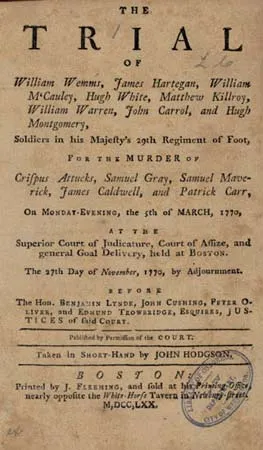
Washington was followed by John Adams as President. A lawyer and political activist before the Revolution, Adams was devoted to the right to counsel and presumption of innocence. He defied anti-British sentiment and successfully defended British soldiers against murder charges arising from the Boston Massacre, including the captain of the troops, Thomas Preston. Adams described the mob of Bostonians at the Massacre as "a motly rabble of saucy boys, negroes, and molattoes, Irish teagues and outlandish jack tarrs." Adams was a Massachusetts delegate to the Continental Congress and became a leader of the Revolution. As a diplomat, he helped negotiate a peace treaty with the British and secured vital governmental loans.
Adams nominated George Washington to serve as commander of the fledging Continental Army. He selected Jefferson to draft the Declaration of Independence. Both decisions were designed to ensure Virginia's support for the revolution. Also, he dominated the debate in the Congress on July 2–4, 1776, defending Jefferson's draft of the declaration and demanding unanimous support for a decisive break with Great Britain. Moreover, he had written Thoughts on Government, which circulated throughout the colonies as the major guidebook for the drafting of new state constitutions. In it, among other concerns, he contemplated the sort of representative assembly that would be most conducive to good government:
|
|
Boston trial of British soldiers |
It should be in miniature an exact portrait of the people at large. It should think, feel, reason, and act like them. That it may be the interest of this assembly to do strict justice at all times, it should be an equal representation, or, in other words, equal interests among the people should have equal interests in it. Great care should be taken to effect this, and to prevent unfair, partial, and corrupt elections.
He drafted the Plan of Treaties in July 1776, a document that provided the framework for a treaty with France and that almost inadvertently identified the strategic priorities that would shape American foreign policy over the next century. He was the unanimous choice to head the Board of War and Ordnance and was thereby made in effect a one-man war department responsible for raising and equipping the American army and creating from scratch an American navy. As the prospects for a crucial wartime alliance with France improved late in 1777, he was chosen to join Benjamin Franklin in Paris to conduct the negotiations. In February 1778 he sailed for Europe, accompanied by 10-year-old John Quincy.
Adams drafted what became the Massachusetts constitution (1780), which immediately became the model for the other state constitutions and-in its insistence on a bicameral legislature and the separation of powers-a major influence on the Constitution of the United States.
Adams accused Thomas Paine of a plan "so democratical, without any restraint or even an attempt at any equilibrium or counter-poise, that it must produce confusion and every evil work" and "has a better hand at pulling down than building." Adams thought that popular assemblies needed to be checked because they were "productive of hasty results and absurd judgements." in his Defense of the Constitutions of Government of the United States of America (1787), he said that if the majority were to control all branches of government, "debts would be abolished first; taxes laid heavy on the rich, and not at all on others;" Adams worried that if political power were "wholly entrusted" to the people, "the poor and the vicious would instantly rob the rich and virtuous."
In 1769, Adams won his first noticeable case. Adams succeeded in having charges on wine smuggling dropped against his client. His client was the richest man in Boston, John Hancock.
Adams' ideas influenced the Constitution, but he hated criticism and signed the Alien and Sedition Acts, which allowed him to go after aliens and journalists who criticized him. Immigrants from Ireland were considered to be suspicious because of the Irish Rebellion, and immigrants from France were suspect because of the French Revolution. The Alien and Sedition Acts were unpopular, and Jefferson and Madison opposed them. They wrote the Kentucky and Virginia Resolutions, which claimed that states could nullify any unconstitutional law, especially the Alien and Sedition Acts. The Alien Friends Act and the Sedition Act expired in 1800, and the Naturalization Act was repealed in 1802. The Alien Enemies Act, as amended, is still in effect.
Adams built up the navy to fight an undeclared Quasi-War with France. The Quasi-War involved French attacks on American ships because America wanted to be neutral and trade with both Britain and France after the French Revolution. France accused Americans of aiding their enemy.
The Alien Friends Act of 1798 (officially "An Act Concerning Aliens") authorized the president to arbitrarily deport any non-citizen who was determined to be "dangerous to the peace and safety of the United States." Once a non-citizen was determined to be dangerous or was suspected of conspiring against the government, the president had the power to set a reasonable amount of time for departure, and remaining after the time limit could result in up to three years in prison. The law was never directly enforced, but it was often used in conjunction with the Sedition Act to suppress criticism of the Adams administration. Upon enactment, the Alien Friends Act was authorized for two years, and it was allowed to expire at the end of this period. Democratic-Republicans opposed the law, with Thomas Jefferson referring to it as "a most detestable thing... worthy of the 8th or 9th century."
The Naturalization Act of 1798 increased the residency requirement for American citizenship from five to 14 years and increased the notice time from three to five years. Although the law was passed under the guise of protecting national security, most historians conclude it was really intended to decrease the number of citizens, and thus voters, who disagreed with the Federalist Party. At the time, the majority of immigrants supported Thomas Jefferson and the Democratic-Republicans — the political opponents of the Federalists. It did not have an expiration date, but it was repealed by the Naturalization Law of 1802.
The Sedition Act of 1798 was used to suppress speech critical of the Adams administration, including the prosecution and conviction of many Jeffersonian newspaper owners who disagreed with the Federalist Party. The Sedition Act made it a crime for newspapers to publish "false, scandalous and malicious" stories about the government. The Sedition Act did not extend enforcement to speech about the Vice President, as then-incumbent Thomas Jefferson was a political opponent of the Federalist-controlled Congress. The Sedition Act was allowed to expire in 1800, and its enactment is credited with helping Jefferson win the presidential election that year.
The Alien Enemies Act of 1798, had been invoked just four times: in the War of 1812, World War I, World War II when it was used to justify the internment of Japanese, Italian and German immigrants, and by President Trump in 2025 to deport immigrants from Venezuela without due process. The law's roots lie in an undeclared sea conflict between a young American nation and France. President John Adams signed the Alien Enemies Act in July 1798 as the United States came to the brink of war with France. The law empowers the US government to detain and even expel immigrants age 14 or older without a court hearing. It applies in times of declared war and when the United States faces the risk of invasion by a foreign nation - the Adams administration feared France would invade the United States by land. The Ipswich Journal of Suffolk, England, reported at the time that the passage of the law "virtually declared" a war between the United States and France. But a full-blown conflict did not materialize — the series of naval battles between the United States and France in the late 18th century became known as the Quasi-War. And in the years that followed, the three other components of the Alien and Sedition Acts lapsed. The Alien Enemies Act, however, lacked a clause setting its expiration and remained on the books. So 14 years after its creation, President James Madison's administration was able to summon the law to target British immigrants as the United States fought the War of 1812, a nearly three-year conflict over maritime rights. In a declaration dated July 11, 1812, Mr. Madison's secretary of state, James Monroe, decreed that "all the subjects of His Britannic Majesty, residing within the United States, have become alien enemies." The federal government said British immigrants could be detained if they refused to move 40 miles from the coast, away from cities including Boston, New York and Washington. A century passed before the law was used again, this time by President Woodrow Wilson. The Wilson administration applied the law from the opening days of World War I, requiring German immigrants age 14 or older to be entered into a registry, photographed, fingerprinted and, in some cases, detained, said Prof. Christopher Capozzola, a history professor at the Massachusetts Institute of Technology and an expert on the war. "It was a pretty dusty statute in 1917," Professor Capozzola said, but its application was far-reaching, authorizing the detention of some 6,000 Germans. There were no substantial legal challenges. The law's most well-known invocation came about a quarter-century later, when President Franklin D. Roosevelt summoned it in the hours after the bombing of Pearl Harbor by Japanese warplanes, an attack that killed more than 2,300 Americans and drew the United States into World War II. The Roosevelt administration, citing an "invasion" by Japan and the threat of invasions by Germany and Italy, began to round up Japanese, German and Italian immigrants. Roosevelt also cited further wartime powers to issue Executive Order 9066, which interned Japanese Americans using powers unrelated to the Alien Enemies Act. That executive order was upheld by the Supreme Court in Korematsu v. United States, a notorious 1944 decision that was overturned in 2018. All told, more than 100,000 people of Japanese descent were forcibly interned in military facilities, gyms, jails, fair grounds and racetracks. Another 10,000 or so Germans and a few thousand Italians were also interned. In 1948, the Supreme Court rejected a challenge to President Harry S. Truman's use of the Alien Enemies Act to expel a German immigrant in 1946, after World War II had ended. The ruling in the case, Ludecke v. Watkins, was 5 to 4. Justice Felix Frankfurter, writing for the majority, said that war "does not cease with a cease-fire order" and that a president's power under the Alien Enemies Act "begins when war is declared but is not exhausted when the shooting stops." Writing in dissent, Justice Hugo L. Black countered that it was "nothing but a fiction to say" that the United States was still at war with Germany, which had surrendered in 1945. "The 1798 act did not grant its extraordinary and dangerous powers," Justice Black wrote, "to be used during the period of fictional wars."
These resolutions were passed by the legislatures of Kentucky and Virginia in response to the Alien and Sedition Acts of 1798 and were authored by Thomas Jefferson and James Madison, respectively. The resolutions argued that the federal government had no authority to exercise power not specifically delegated to it in the Constitution.
The ideas in the Virginia and Kentucky Resolutions became a precursor to John C. Calhoun's arguments about the power of states to nullify federal laws. However, during the nullification controversy of the 1830s, Madison rejected the legitimacy of nullification, and argued that it was not part of the Virginia position in 1798.
The Virginia Resolution, authored by Madison, said that by enacting the Alien and Sedition Acts, Congress was exercising "a power not delegated by the Constitution, but on the contrary, expressly and positively forbidden by one of the amendments thereto; a power, which more than any other, ought to produce universal alarm, because it is leveled against that right of freely examining public characters and measures, and of free communication among the people thereon, which has ever been justly deemed, the only effectual guardian of every other right." Madison hoped that other states would register their opposition to the Alien and Sedition Acts as beyond the powers given to Congress.
The Kentucky Resolutions, authored by Jefferson, went further than Madison's Virginia Resolution and asserted that states had the power to nullify unconstitutional federal laws. The Kentucky Resolution declared in part, "[T]he several states who formed that instrument [the Constitution], being sovereign and independent, have the unquestionable right to judge of its infraction; and that a nullification, by those [states], of all unauthorized acts….is the rightful remedy."
Nullification led to the idea of states' rights, which was controversial because of its flexibility. The same doctrine of nullification and states' rights that was used to attack the Alien and Sedition laws was later used to defend freedom, slavery and New England shipping interests. Almost any threatened interest could claim a right to nullify laws that endangered it.
The Resolutions were produced primarily as campaign material for the 1800 United States presidential election and had been controversial since their passage, eliciting disapproval from ten state legislatures. Ron Chernow, who wrote historical biographies, assessed the theoretical damage of the resolutions as "deep and lasting ... a recipe for disunion." George Washington was so appalled by them that he told Patrick Henry that if "systematically and pertinaciously pursued," they would "dissolve the union or produce coercion." Their influence reverberated right up to the Civil War and beyond. In the years leading up to the Nullification Crisis, the resolutions divided Jeffersonian democrats, with states' rights proponents such as John C. Calhoun supporting the Principles of '98 and President Andrew Jackson opposing them. Years later, the passage of the Fugitive Slave Act of 1850 led anti-slavery activists to quote the Resolutions to support their calls on Northern states to nullify what they considered unconstitutional enforcement of the law.

|
| Thomas Jefferson |
Adams was followed by Thomas Jefferson as President. Jefferson allowed most of the Alien and Sedition Acts to expire. However, the Alien Enemies Act still exists. Jefferson pardoned several of those imprisoned under the Alien and Sedition Acts. Congressional Republicans repealed the Judiciary Act of 1801, which removed nearly all of Adams' "midnight judges." A subsequent appointment battle led to the Supreme Court's landmark decision in Marbury v. Madison, asserting judicial review over executive branch actions. After two terms, he had lowered the national debt from $83 million to $57 million, largely by reducing the size of the Navy.
American merchant ships had been protected from Barbary Coast pirates by the Royal Navy when the states were British colonies. After independence, however, pirates often captured US merchant ships, pillaged cargoes, and enslaved or held crew members for ransom. Jefferson had opposed paying tribute to the Barbary States since 1785. In 1801, he authorized a US Navy fleet under Commodore Richard Dale to make a show of force in the Mediterranean, the first American naval squadron to cross the Atlantic. Following the fleet's first engagement, he successfully asked Congress for a declaration of war. The "First Barbary War" was the first foreign war fought by the US
Pasha of Tripoli Yusuf Karamanli captured the USS Philadelphia, so Jefferson authorized William Eaton, the US Consul to Tunis, to lead a force to restore the pasha's older brother to the throne. The American navy forced Tunis and Algiers into breaking their alliance with Tripoli. Jefferson ordered five separate naval bombardments of Tripoli, leading the pasha to sign a treaty that restored peace in the Mediterranean. This victory proved only temporary, but according to Wood, "many Americans celebrated it as a vindication of their policy of spreading free trade around the world and as a great victory for liberty over tyranny."
Spain ceded ownership of the Louisiana territory in 1800 to France. Napoleon realized that French military control was impractical over such a vast remote territory, and he was in dire need of funds for his wars on the home front. In early April 1803, he unexpectedly made negotiators a counter-offer to sell 827,987 square miles (2,144,480 square kilometres) of French territory for $15 million (~$371 million in 2023), doubling the size of the United States. James Monroe and Robert R. Livingston signed the treaty on July 3, 1803. There were more than 50 Indian wars in the Louisiana territory from 1819 to 1890.
Jefferson appointed secretary Meriwether Lewis and William Clark to lead the Corps of Discovery (1803–1806). In the months leading up to the expedition, Jefferson tutored Lewis in the sciences of mapping, botany, natural history, mineralogy, astronomy and navigation, giving him unlimited access to his library at Monticello. The expedition lasted from May 1804 to September 1806 and obtained a wealth of scientific and geographic knowledge, including knowledge of many Indian tribes. Lewis and Clark's expidition to the Pacific Northwest was made possible by tribe after tribe of American Indians (including the Mandans and Clatsops), with help from Shoshone guides Sacagawea and Toby, who served as interpreters.
Jefferson organized three other western expeditions: the William Dunbar and George Hunter Expedition on the Ouachita River (1804–1805), the Thomas Freeman and Peter Custis Expedition (1806) on the Red River, and the Zebulon Pike Expedition (1806–1807) into the Rocky Mountains and the Southwest.
In 1804, Burr was soundly defeated in his bid to be elected New York governor. During the campaign, Alexander Hamilton made publicly callous remarks regarding Burr's moral character. Burr challenged Hamilton to a duel, held on July 11, 1804 in Weehawken, New Jersey. In the duel, Burr mortally wounded Hamilton, who died the following day. Burr was subsequently indicted for Hamilton's murder, causing him to flee to Georgia, even though he remained president of the US Senate during Supreme Court Justice Samuel Chase's impeachment trial. Both indictments quietly died and Burr was not prosecuted.
In August 1804, Burr contacted British Minister Anthony Merry offering to cede US western territory in return for money and British ships. After leaving office in April 1805, Burr traveled west and conspired with Louisiana Territory governor James Wilkinson, beginning a large-scale recruitment for a military expedition. Burr discussed seizing control of Mexico or Spanish Florida, or forming a secessionist state in New Orleans or the Western US In the fall of 1806, Burr launched a military flotilla carrying about 60 men down the Ohio River. Wilkinson renounced the plot and reported Burr's expedition to Jefferson, who ordered Burr's arrest. On February 13, 1807, Burr was captured in Louisiana and sent to Virginia to be tried for treason. Burr's 1807 conspiracy trial became a national issue. Jefferson attempted to preemptively influence the verdict by telling Congress that Burr's guilt was "beyond question," but the case came before his longtime political foe, and distant cousin, John Marshall, who dismissed the treason charge. Burr's legal team subpoenaed Jefferson, but Jefferson refused to testify, making the first argument for executive privilege. Instead, Jefferson provided relevant legal documents. After a three-month trial, the jury found Burr not guilty, while Jefferson denounced his acquittal.
In his annual message of December 1806, Jefferson denounced the international slave trade as "violations of human rights" and called on the new Congress to immediately criminalize it. The following year, in 1807, Congress passed the Act Prohibiting Importation of Slaves, which Jefferson signed. The act established severe punishment against the international slave trade, although it did not address the issue domestically. The Act greatly reduced the Atlantic slave trade as soon as the Constitution would allow, which was January 1, 1808. However, some slave ships broke the law.
Jefferson and Madison backed resolutions to limit or ban British imports in retaliation for British seizures of American shipping. Also, in 1808, Jefferson was the first president to propose a broad federal plan to build roads and canals across several states, asking for $20 million, further alarming Randolph and believers of limited government. In 1807, Jefferson then led the enactment of the Embargo Act of 1807, directed at both France and the British, which triggered economic chaos in the US and was strongly criticized, leading Jefferson to abandon the policy a year later.
The Insurrection Act of 1807 empowers the president of the United States to deploy the US military and federalized National Guard troops within the United States to suppress civil disorder, insurrection, or rebellion. The act provides a "statutory exception" to the Posse Comitatus Act of 1878, which limits the use of military personnel under federal command for law enforcement purposes within the United States.
Marbury v. Madison (1803) was a landmark decision of the US Supreme Court that established the principle of judicial review, meaning that American courts have the power to strike down laws and statutes they find to violate the Constitution of the United States. Decided in 1803, Marbury is regarded as the single most important decision in American constitutional law. It established that the US Constitution is actual law, not just a statement of political principles and ideals. It also helped define the boundary between the constitutionally separate executive and judicial branches of the federal government.
The case originated in early 1801 and stemmed from the rivalry between outgoing President John Adams and incoming President Thomas Jefferson. Adams, a member of the Federalist Party, had lost the US presidential election of 1800 to Jefferson, who led the Democratic-Republican Party. In March 1801, just two days before his term as president ended, Adams appointed several dozen Federalist Party supporters to new circuit judge and justice of the peace positions in an attempt to frustrate Jefferson and the Democratic-Republicans. The outgoing US Senate quickly confirmed Adams' appointments, but outgoing secretary of state John Marshall was unable to deliver all of the new judges' commissions before Adams' departure and Jefferson's inauguration. Jefferson believed the undelivered commissions were void and instructed his secretary of state, James Madison, not to deliver them. One of the undelivered commissions belonged to William Marbury, a Maryland businessman who had been a strong supporter of Adams and the Federalists. In late 1801, after Madison had repeatedly refused to deliver his commission, Marbury filed a lawsuit in the Supreme Court asking the Court to issue a writ of mandamus forcing Madison to deliver his commission.
In an opinion written by Marshall, who by then had been appointed Chief Justice of the United States, the Supreme Court held that Madison's refusal to deliver Marbury's commission was illegal. The Court also held that it was normally proper in such situations for a court to order the government official in question to deliver the commission. In Marbury's case, however, the Court did not order Madison to comply. Examining the law Congress had passed to define Supreme Court jurisdiction over types of cases like Marbury's-Section 13 of the Judiciary Act of 1789-the Court found that the Act had expanded the definition of the Supreme Court's jurisdiction beyond what was originally set forth in the US Constitution. The Court then struck down Section 13 of the Act, announcing that American courts have the power to invalidate laws that they find to violate the Constitution-a power now known as judicial review. Because striking down the law removed any jurisdiction the Court might have had over the case, the Court could not issue the writ that Marbury had requested.
Besides its legal issues, the case of Marbury v. Madison also created a difficult political dilemma for John Marshall and the Supreme Court. If the Court had ruled in Marbury's favor and issued a writ of mandamus ordering Madison to deliver Marbury's commission, then Jefferson and Madison would probably have simply ignored the writ. This would have made the Court look impotent and emphasized the shakiness of the early American judiciary. On the other hand, a simple ruling against Marbury would have given Jefferson and the Democratic-Republicans a clear political victory over the Federalists.
Marshall solved both problems. First, he had the Court rule that Madison's withholding of Marbury's commission was illegal, which pleased the Federalists. Then, however, he also ruled that the Court could not grant Marbury his requested writ of mandamus, which gave Jefferson and the Democratic-Republicans the result they desired. Lastly, in what the American legal scholar Laurence Tribe calls "an oft-told tale ... [that] remains awe-inspiring," Marshall had the Court rule in a way that maneuvered Marbury's simple petition for a writ of mandamus into a case that presented a question that went to the heart of American constitutional law itself. The American political historian Robert G. McCloskey described:
[Marbury v. Madison] is a masterwork of indirection, a brilliant example of Marshall's capacity to sidestep danger while seeming to court it. ... The danger of a head-on clash with the Jeffersonians was averted by the denial of jurisdiction: but, at the same time, the declaration that the commission was illegally withheld scotched any impression that the Court condoned the administration's behavior. These negative maneuvers were artful achievements in their own right. But the touch of genius is evident when Marshall, not content with having rescued a bad situation, seizes the occasion to set forth the doctrine of judicial review. It is easy for us to see in retrospect that the occasion was golden, ... but only a judge of Marshall's discernment could have recognized it.

|
| List of slaves at Monticello, 1810. |
Although Jefferson contributed ideals that are important to democracy, he struggled with his contradictions. Jefferson supported freedom of speech and freedom of religion. Even though he didn't like the newspapers of his day and age, he thought that freedom of the press was important for democracy. He admitted that slavery and the slave trade were wrong. However, he was inconsistent on the equality issue.
The first draft of the Declaration of Independence condemned the British for slavery and also condemned them for freeing American slaves who fought for the British. The following paragraph was removed from the final document. It read:
he has waged cruel war against human nature itself, violating it's most sacred rights of life & liberty in the persons of a distant people who never offended him, captivating & carrying them into slavery in another hemisphere, or to incur miserable death in their transportation thither. this piratical warfare, the opprobrium of infidel powers, is the warfare of the CHRISTIAN king of Great Britain. determined to keep open a market where MEN should be bought & sold, he has prostituted his negative for suppressing every legislative attempt to prohibit or to restrain this execrable commerce: and that this assemblage of horrors might want no fact of distinguished die, he is now exciting those very people to rise in arms among us, and to purchase that liberty of which he has deprived them, & murdering the people upon whom he also obtruded them; thus paying off former crimes committed against the liberties of one people, with crimes which he urges them to commit against the lives of another.
One of Jefferson's many complaints against Britain that was in the final draft of the the Declaration is as follows:
He has excited domestic insurrections amongst us, and has endeavoured to bring on the inhabitants of our frontiers, the merciless Indian Savages, whose known rule of warfare, is an undistinguished destruction of all ages, sexes and conditions.
Jefferson made remarks that contradict his declaration that all men are created equal in his Notes on the State of Virginia (1781). There he said, "I advance it therefore as a suspicion only, that the blacks, whether originally a distinct race, or made distinct by time and circumstances, are inferior to the whites in the endowments both of body and mind," arguing they had "less sensibility of pain or of heat," a "dull" imagination, and weaker powers of reasoning and moral reflection. He went on to claim that, unlike whites, black people "discover an ardent imagination," but "it is seldom exerted in anything higher" than music or mimicry, and that their "existence appears to participate more of sensation than reflection." At the same time Jefferson condemned slavery as a "moral depravity" and a "hideous blot," warning that if the institution endured it would bring "convulsions which will probably never end but in the extermination of one or the other race." Jefferson admitted that slavery was so wrong that he trembled when he reflected on the justice of God. As Jefferson said,
And can the liberties of a nation be thought secure when we have removed their only firm basis, a conviction in the minds of the people that these liberties are of the gift of God? That they are not to be violated but with his wrath? Indeed I tremble for my country when I reflect that God is just: that his justice cannot sleep for ever: that considering numbers, nature and natural means only, a revolution of the wheel of fortune, an exchange of situation, is among possible events: that it may become probable by supernatural interference! The Almighty has no attribute which can take side with us in such a contest.—But it is impossible to be temperate and to pursue this subject through the various considerations of policy, of morals, of history natural and civil. We must be contented to hope they will force their way into every one's mind. I think a change already perceptible, since the origin of the present revolution. The spirit of the master is abating, that of the slave rising from the dust, his condition mollifying, the way I hope preparing, under the auspices of heaven, for a total emancipation, and that this is disposed, in the order of events, to be with the consent of the masters, rather than by their extirpation.
Jefferson also described slavery as an "abominable crime." He condemned the "deplorable entanglement," adding that "I shall not live to see it but those who come after us will be wiser than we are, for light is spreading and man improving."
|
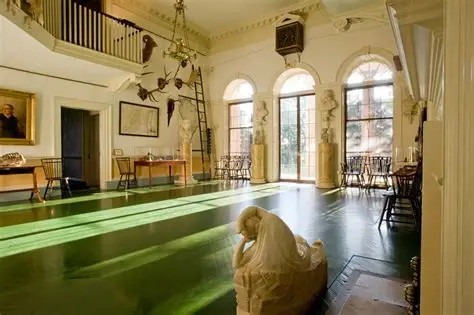
| Jefferson's home Monticello, which was built by free workers, indentured servants and slaves. |
Martha Jefferson died during her marriage in 1782. Jefferson told Martha that he wouldn't remarry, and he never did. Historical records describe Sally as "attractive." In 1787, at 14, Sally Hemings accompanied Jefferson's daughter to Paris where they joined Thomas Jefferson. In Paris, Hemings was legally free, as slavery was not legal in France. At some time during her 26 months in Paris, Jefferson is believed to have begun intimate relations with her. As attested by her son, Madison Hemings, Sally agreed with Jefferson that she would return to Virginia and resume her life in slavery, as long as all their children would be freed when they came of age. Multiple lines of evidence, including modern DNA analyses, indicate that Jefferson impregnated Hemings several times over the years they lived together on Jefferson's Monticello estate, and historians now broadly agree that he was the father of her six children. Four of Hemings' children survived into adulthood and were freed by Jefferson or his will as they came of age. Hemings died in Charlottesville, Virginia, in 1835 in the home of her freed sons. Jefferson didn't free most of his slaves at least in part because, while he was frugal with public money as President, he spent too much on Monticello and other things in private life, and therefore couldn't afford to free more than a few slaves, all members of the Hemings family.
Benjamin Banneker was a mathematician, astronomer, compiler of almanacs, inventor, and writer. Banneker, a freeman, was raised on a farm near Baltimore that he would eventually inherit from his father. Although he periodically attended a one-room Quaker schoolhouse, Banneker was largely self-educated and did much of his learning through the voracious reading of borrowed books. Early on he demonstrated a particular facility for mathematics. While still a young man (probably about age 20), he built a wooden clock that kept precise time. Banneker was encouraged in the study of astronomy by George Ellicott, a Quaker and amateur astronomer whose family owned nearby mills. As early as 1788, Banneker began to make astronomical calculations, and he accurately predicted a solar eclipse that occurred in 1789. In 1791 he sent Thomas Jefferson, then US secretary of state, a letter asking Jefferson's aid in bringing about better conditions for African Americans. With the letter, Banneker also sent a handwritten copy of the manuscript for his 1792 Pennsylvania, Delaware, Maryland, and Virginia Almanack and Ephemeris, which he continued to publish annually through 1797.
Writing to Edward Carrington in 1787, Jefferson expressed that he would prefer newspapers without government over government without newspapers. After years of being savaged by the partisan press as president, Jefferson wrote that a man who reads newspapers knows less truth than one who reads nothing, since the reader is so far misled. He also lamented that the press had degraded itself by prioritizing falsehood over fact — that truth itself had become suspect because it appeared alongside so many lies.
Jefferson believed that those who worked for others weren't truly free, and that small farmers were "the chosen people of God." James Hammond was another Southerner who praised rural life and condemned the "vices of our nature" in cities and factories. For many years, with a few exceptions such as DeBow, Southerners preferred agriculture to factories.

|
| James Madison |
Madison was popularly acclaimed as the "Father of the Constitution" for his pivotal role in drafting and promoting the Constitution of the United States and the Bill of Rights. Dissatisfied with the weak national government established by the Articles of Confederation, he helped organize the Constitutional Convention, which produced a new constitution designed to strengthen republican government against the democratic assembly. Madison's Virginia Plan was the basis for the convention's deliberations. He became one of the leaders in the movement to ratify the Constitution and joined Alexander Hamilton and John Jay in writing The Federalist Papers, a series of pro-ratification essays that remain prominent among works of political science in American history.
Reentering the Virginia legislature in 1784, Madison defeated Patrick Henry's bill to give financial support to "teachers of the Christian religion." To avoid the political effect of his extreme nationalism, he persuaded the states-rights advocate John Tyler to sponsor the calling of the Annapolis Convention of 1786, which, aided by Madison's influence, produced the Constitutional Convention of 1787. There his Virginia, or large-state, plan, put forward through Governor Edmund Randolph, furnished the basic framework and guiding principles of the Constitution, earning him the title of father of the Constitution. Madison believed keenly in the value of a strong government in which power was well controlled because it was well balanced among the branches. Delegate William Pierce of Georgia wrote that, in the management of every great question, Madison "always comes forward the best informed Man of any point in debate." To promote ratification he collaborated with Alexander Hamilton and John Jay in newspaper publication of the Federalist papers (Madison wrote 29 out of 85), which became the standard commentary on the Constitution.
Elected to the new House of Representatives, Madison sponsored the first 10 amendments to the Constitution-the Bill of Rights-placing emphasis in debate on freedom of religion, speech, and press. His leadership in the House came to an end when he split with Secretary of the Treasury Hamilton over methods of funding the war debts. Hamilton's aim was to strengthen the national government by cementing men of wealth to it; Madison sought to protect the interests of Revolutionary veterans. Hamilton's victory turned Madison into a strict constructionist of the congressional power to appropriate for the general welfare. He denied the existence of implied power to establish a national bank to aid the Treasury. Later, as president, he asked for and obtained a bank as "almost [a] necessity" for that purpose, but he contended that it was constitutional only because Hamilton's bank had gone without constitutional challenge.
Madison emerged as an important leader in the House of Representatives and was a close adviser to President George Washington. During the early 1790s, Madison opposed the economic program and the accompanying centralization of power favored by Secretary of the Treasury Hamilton. Alongside Thomas Jefferson, he organized the Democratic– Republican Party in opposition to Hamilton's Federalist Party. Madison served as Jefferson's Secretary of State from 1801 to 1809, during which time he helped convince Jefferson to submit the Louisiana Purchase Treaty for approval by the Senate.
Madison was elected president in 1808 and was reelected in 1812. The 1812 election was held during wartime and convinced Madison of the necessity of a stronger federal government. Although the war ended inconclusively in 1815, many Americans viewed it as a successful "second war of independence" against the British which bolstered Madison's popularity. He presided over the creation of the Second Bank of the United States and the enactment of the protective Tariff of 1816. The United States acquired 26 million acres of land through treaties or war from Native American tribes during Madison's presidency.
Anglo-American tensions stemmed from long-standing differences over territorial expansion in North America and British support for Tecumseh's confederacy, which resisted US colonial settlement in the Old Northwest. For example Tecumseh met with governor William Henry Harrison of Indiana Territory to complain about whites encroaching on Indian land. Harrison replied to Tecumseh's complaint by attacking the Shawnees and their allies at the Battle of Tippecanoe. Five of the seven largest land battles of the war were fought against Native Americans, not the British. Americans wanted the land of Native Americans, who were seen as being allied with the British. In 1807, these tensions escalated after the Royal Navy began enforcing tighter restrictions on American trade with France and impressed sailors who were originally British subjects, even those who had acquired American citizenship. Motivated by a desire to acquire land held by the Britain, Spain, and Native Americans, and after diplomatic protests and a trade embargo failed to end British seizures of American-shipped goods and impressment of American sailors, Madison led the United States into the War of 1812. In the years prior to the war, Jefferson and Madison had reduced the size of the military, leaving the country with a military force consisting mostly of poorly trained militia members. The British thought that impressment was the way to get the number of sailors they needed to fight against Napoleon. In response to the war, the British blockaded the American coast, harming trade. Americans tried to seize Upper and Lower Canada, without success. The British tried to seize New York and Maryland, without success. In 1814, the British burned the capital, including both the White House and Congress. In 1815, the Treaty of Ghent ended the war. America agreed to leave Canada alone, and the British stopped helping Native Americans attack the US.
With independence won, American settlers pushed into Creek homelands of western Georgia and Alabama. The onslaught evoked a series of treaties in which the Creeks ceded lands to the United States. This encroachment split the tribe as factions evolved that both resisted and embraced the expansion of white society.
Tensions rose when the Shawnee chief Tecumseh visited the Creek towns in the spring of 1811. Tecumseh brought a message of Indian unification and resistance to further American settlement. His words further split the Creeks as the militant sect, known as Red Sticks, asserted their control and a small civil war exploded within the tribe.
The internal conflict amongst the Creeks soon turned into an all-out war. On August 30, 1813, about 1,000 Red Sticks attacked Fort Mims, northeast of Mobile and killed all the inhabitants. The event sent shockwaves through the Alabama and Mississippi Territories along with Georgia and Tennessee. Tennessee governor Willie Blount directed the commander of the state militia, Maj. Gen. Andrew Jackson to mobilize a force to suppress the Creeks. Authorities in Georgia and Mississippi also planned offensives, but the main effort would be led by Jackson.
Jackson moved his men into Alabama and constructed a supply base, Fort Strother. In early November, Jackson dispatched Col. John Coffee with a mounted force to the Creek town of Tallushatchee. Coffee's men attacked and destroyed the town on November 3. Jackson followed up Coffee's victory six days later by attacking Talladega, held by Red Stick chief William Weatherford and earned another victory over the Creeks.
At the end of the month, Georgia militia under Brig. Gen. John Floyd struck the towns of Autosee and Tallassee. Floyd burned the dwellings before withdrawing to the east. Two days before Christmas, Mississippians led by Brig. Gen. Ferdinand Claiborne and supported by friendly Choctaws led by Pushmataha attacked the village of Eccanachaca or the Holy Ground, near modern Montgomery. Claiborne inflicted a number of casualties and burned the town. Expiration of enlistments as well as supply problems compelled the Americans to suspend operations until early the following year.
Jackson's command left Fort Strother on January 17, 1814. His destination was the main Red Stick town of Tohopeka. Situated on land between a major curve of the Tallapoosa River, it was known to whites as Horseshoe Bend. Rather than await Jackson's movement, the Red Sticks sallied out of their town and struck the Americans on January 22 in their camp along Emuckfau Creek. Jackson's men fought well and managed to repulse the assault. Still, Jackson decided to withdraw due to a lack of supplies and returned to Fort Strother.
Jackson set out again on March 14. Arriving opposite Horseshoe Bend on March 27, he found the Red Sticks, under Menewa, entrenched behind a massive log breastwork. After an artillery barrage, Jackson sent Coffee, supported by friendly Creeks, and Cherokees on a flanking maneuver across the river while he launched a frontal assault with the 39th US Infantry. The Regulars managed to break through the position and period of brutal fighting ensued through the remainder of the day. The Red Sticks sustained 75 percent casualties. Horseshoe Bend effectively brought an end to the fighting as those Red Sticks still in resistance fled to the safety of Spanish Florida.
Jackson met with the militant chiefs to negotiate a treaty at Fort Jackson, Alabama Territory, in early August. For igniting the war, Jackson demanded 23 million acres of Creek land. The chiefs acquiesced and signed the terms on August 9, 1814. Many Creeks continued to reside in the Old Southwest for the next two decades until they were forcibly removed to the Indian Territory in the fall of 1836. Land was taken away from the Creeks, whether they fought for or against Jackson. Jackson had disobedient soldiers whipped or executed.
The Battle of New Orleans was fought on January 8, 1815, between the British Army under Major General Sir Edward Pakenham and the United States Army under Brevet Major General Andrew Jackson, roughly 5 miles southeast of the French Quarter of New Orleans, Louisiana.
The battle was the climax of the five-month Gulf Campaign (September 1814 to February 1815) by Britain to try to take New Orleans, West Florida, and possibly Louisiana Territory which began at the First Battle of Fort Bowyer. Britain started the New Orleans campaign on December 14, 1814, at the Battle of Lake Borgne and numerous skirmishes and artillery duels happened in the weeks leading up to the final battle.
The battle took place 15 days after the signing of the Treaty of Ghent, which formally ended the War of 1812, on December 24, 1814, though it would not be ratified by the United States (and therefore did not take effect) until February 16, 1815, as news of the agreement had not yet reached the United States from Europe. Despite a British advantage in numbers, training, and experience, the American forces defeated a poorly executed assault in slightly more than 30 minutes. The Americans suffered 71 casualties, while the British suffered over 2,000, including the deaths of Pakenham and his second-in-command, Major General Samuel Gibbs.
The First Seminole War was fought between approximately 1817 and 1819. The Seminoles were largely of Creek origin and lived in villages in northern Florida. The area was also home to a number of Africans, free African Americans, and runaway African American slaves, all of whom were known as Black Seminoles. The Seminoles and Black Seminoles were aligned with the British against the Americans before and during the War of 1812 and were the targets of frequent raids by militias from Georgia, who sought runaway slaves as well as land and cattle. In 1816, US soldiers destroyed a garrison that was a refuge for escaped slaves, killing some 270 people. The Seminoles subsequently began raiding American settlements along the Georgia–Florida border. In what many writers identify as the beginning of the First Seminole War, in November 1817, US soldiers attacked the Seminole village of Fowltown (near present-day Bainbridge, Georgia), and a battle ensued. In retaliation, a group of Seminoles laid siege to a boat carrying reinforcements to Fort Scott on the Apalachicola River and killed 43 men, women, and children. In December 1817, US General Andrew Jackson was given command of US forces in the area. In the following spring, he led troops against Seminole villages on Lake Miccosukee and along the Suwannee River, destroying them as he went. In addition, he seized the Spanish military post at what is now St. Marks and then proceeded to take the Spanish-held town of Pensacola.
In East Florida (east side of Apalachicola River), Jackson gathered his forces at Fort Scott in March 1818, including 800 US Army regulars, 1,000 Tennessee volunteers, 1,000 Georgia militia, and about 1,400 friendly Lower Creek warriors (under the command of Brigadier General William McIntosh, a Creek chief). On March 15, Jackson's army entered Florida, marching down the banks of the Apalachicola River. When they reached the site of the Negro Fort, Jackson had his men construct a new fort, Fort Gadsden. The army then set out for the Mikasuki villages around Lake Miccosukee. The Indian town of Anhaica (today's Tallahassee) was burned on March 31, and the town of Miccosukee was taken the next day. More than 300 Indian homes were destroyed. Jackson then turned south, reaching Fort St. Marks (San Marcos) on April 6.
There he found Alexander George Arbuthnot, a Scottish trader based out of the Bahamas. He traded with the Indians in Florida and had written letters to British and American officials on behalf of the Indians. He was rumored to be selling guns to the Indians and to be preparing them for war. He probably was selling guns, since the main trade item of the Indians was deer skins, and they needed guns to hunt the deer. Two Indian leaders, Josiah Francis (Hillis Hadjo), a Red Stick Creek also known as the "Prophet" (not to be confused with Tenskwatawa), and Homathlemico, had been captured when they had gone out to an American ship flying the Union Flag that had anchored off of St. Marks. As soon as Jackson arrived at St. Marks, the two Indians were brought ashore and hanged without trial.
Robert Ambrister, a former officer in the Corps of Colonial Marines, was captured by Jackson's troops. At St. Marks a military tribunal was convened, and Ambrister and Arbuthnot, both British citizens, were charged with aiding the Seminoles and the Spanish, inciting them to war and leading them against the United States. Ambrister was executed by a firing squad of American troops on 29 April 1818. Arbuthnot was hanged from the yardarm of his own ship.
In West Florida (west of the Apalachicola River) General Jackson later reported that Indians were gathering and being supplied by the Spanish, and he left Fort Gadsden with 1,000 men on May 7, headed for Pensacola. The governor of West Florida protested that most of the Indians at Pensacola were women and children and that the men were unarmed, but Jackson did not stop. Jackson also stated (in a letter to George W. Campbell) that the seizure of supplies meant for Fort Crawford gave additional reason for his march on Pensacola. Jackson reached Pensacola on May 23, and after trading fire. The Spanish surrendered Fort Barrancas on May 28.
Secretary of State John Quincy Adams had just started negotiations with Spain for the purchase of Florida. An agreement was then reached whereby Spain ceded East Florida to the United States and renounced all claim to West Florida. The Ambrister and Arbuthnot executions left a stain on Jackson's reputation for the rest of his life, although it was not enough to keep him from becoming president. Jackson was accused of having initiated the war on his own authority, possibly for corrupt purpose, such as a land speculation in Pensacola. When the charges followed him through his later presidential campaigns, he started lying that he had actually been authorized to invade by a secret message sent to him and him alone by James Monroe through congressman John Rhea, and that he had later burned the secret message on orders of Monroe during the Congressional investigation. The so-called Rhea letter has been proven multiple times to have been a bit of extended trickery upon which Jackson constructed later feuds; the consensus of historians remains that "not only did [the Rhea letter] not exist, but could not have existed."
Spain ceded Florida to the United States in 1819 with the Adams–Onís Treaty, and the United States took possession in 1821.