- TECHNOLOGY AND SCIENCE
- FORCES IN NATURE
- QUANTUM ELECTRODYNAMICS
- CARGO CULT SCIENCE
- ADVANCES IN BIOLOGY
- GERM THEORY
- PENICILLIN DISCOVERED
- VACCINES
- INTERNAL COMBUSTION ENGINE
- INVENTION OF THE AIRPLANE
In 1899 Charles H. Duell, the Commissioner of the US Patent Office, said, "Everything that can be invented has been invented."
The late 19th century and 20th century saw large advances in technology and science. James Clerk Maxwell, Michael Faraday, Alessandro Volta, André-Marie Ampère, Nikola Tesla and others did work on electricity. It was found that mathematical problems with widespread electrification canceled out. Electrification and indoor plumbing became widespread. Electricity required copper wiring. 30,000 tons of copper were produced in 1880, 500,000 in 1910.
|
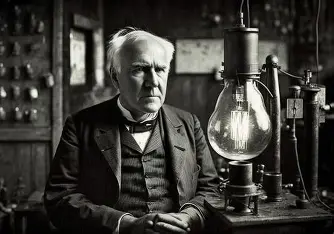
| Thomas Edison |
Thomas Edison experienced his finest hours at Menlo Park. While experimenting on an underwater cable for the automatic telegraph, he found that the electrical resistance and conductivity of carbon (then called plumbago) varied according to the pressure it was under. This was a major theoretical discovery, which enabled Edison to devise a "pressure relay" using carbon rather than the usual magnets to vary and balance electric currents. In February 1877 Edison began experiments designed to produce a pressure relay that would amplify and improve the audibility of the telephone, a device that Edison and others had studied but which Alexander Graham Bell was the first to patent, in 1876. By the end of 1877 Edison had developed the carbon-button transmitter that was used in telephone speakers and microphones for a century thereafter.
Edison unveiled the tinfoil phonograph, which replaced the strip of paper with a cylinder wrapped in tinfoil, in December 1877. It was greeted with incredulity. Indeed, a leading French scientist declared it to be the trick device of a clever ventriloquist. The public's amazement was quickly followed by universal acclaim. Edison was projected into worldwide prominence and was dubbed the Wizard of Menlo Park, although a decade passed before the phonograph was transformed from a laboratory curiosity into a commercial product.
In 1879 Thomas Edison improved on the light bulb. Precursors to the modern light bulb were in the works in Italy and England as early as 1800; Alessandro Volta and Humphry Davy, respectively, developed ways to generate electricity and arcs of light before Warren de la Rue and William Staite improved upon their inventions in the 1840s. Over the next two decades, British scientist Joseph Swan came up with a light bulb that had a carbonized paper filament, but the poor quality of the vacuum in the bulb caused the carbon to disintegrate rapidly, so the bulb glowed for just 13-and-a-half hours.
Edison and his staff had achieved encouraging results with a complex, regulator-controlled vacuum bulb with a platinum filament, but the cost of the platinum would have made the incandescent light impractical. While experimenting with an insulator for the platinum wire, they discovered that, in the greatly improved vacuum they were now obtaining through advances made in the vacuum pump, carbon could be maintained for some time without elaborate regulatory apparatus. Advancing on the work of Swan, Edison found that a carbon filament provided a good light with the concomitant high resistance required for subdivision. Steady progress ensued from the first breakthrough until the initial demonstration for the backers of the Edison Electric Light Company.
Canadians Henry Woodward and Mathew Evans filed a patent for the light bulb in 1874 but abandoned their research due to lack of funding. They sold their US patent 181,613 to Thomas Edison and due to this Edison is now known for the invention of the light bulb. Edison obtained an exclusive license to the Canadian patent.
Swan and Edison later teamed up after some legal struggles over patent infringement, but the competition only continued when Edison designed over 3,000 models of a light bulb at his Menlo Park, NJ, lab between 1879 and 1880. Edison used a better vacuum pump than Swan's, and after he and his posse of assistants had tested thousands of materials, he made a high resistance thin filament made of carbonized bamboo fiber. The fiber was in a high vacuum contained in a tightly sealed glass bulb that lasted up to 1,200 hours, which had a sufficiently long service life to be commercially practical. Today's incandescent bulbs, in which the filament is made of tungsten, last about 1,500 hours. Edison then acquired the famous patent in 1879 for $5,000, which led to a legal battle after the patent office ruled that he was not the inventor. The patent was awarded to Edison and his entire scientific team for a long lasting light bulb.

|
| Early phone |
Antonio Meucci, Alexander Graham Bell, and Elisha Gray amongst others, have all been credited with the telephone's invention. In 1876 Alexander Graham Bell patented the telephone. The Bell patent was commercially decisive and upheld by courts. Bell's first phone call was to his partner Thomas Watson. He said, "Come here, I want you!" (He had spilled acid on himself.) Also in 1876 a Western Union internal memo read, "The telephone has too many shortcomings to be seriously considered as a means of communication." In the same year Sir William Preece, Chief Engineer of the British Post Office, said, "The Americans have need of the telephone, but we do not. We have plenty of messenger boys."
The first fax (short for "facsimile") machine was invented in 1843 by Scottish mechanic Alexander Bain, but English physicist Frederick Bakewell was the first to actually demonstrate facsimile transmission eight years later — at which time Lincoln was still a lawyer in Illinois. However, fax technology wasn't commercialized until 1863, when Italian inventor Giovanni Caselli received a patent for his "telegraphic apparatus."
Military research led to the development of microwaves. The development of the cavity magnetron in the United Kingdom made possible the production of electromagnetic waves of a small enough wavelength (microwaves) to efficiently heat up water molecules. According to legend, American engineer Percy Spencer noticed that radar equipment melted a chocolate bar in his pocket. This led Spencer to create the first true microwave oven by attaching a high-density electromagnetic field generator to an enclosed metal box. The magnetron emitted microwaves into the metal box, blocking any escape. Raytheon, the military contractor that Spencer worked for, filed a US Patent application on October 8, 1945, for a microwave cooking oven. In 1947, the first commercially produced microwave oven was about 6 feet tall, weighed about 750 lbs, and cost about $5,000 (equivalent to $68,227 in 2023).
Charles Babbage (1791-1871) invented a precursor of the modern computer. The Analytical Engine has many essential features found in the modern digital computer. It was programmable using punched cards, an idea borrowed from the Jacquard loom used for weaving complex patterns in textiles. The Engine had a 'Store' where numbers and intermediate results could be held, and a separate 'Mill' where the arithmetic processing was performed. It had an internal repertoire of the four arithmetical functions and could perform direct multiplication and division. It was also capable of functions for which we have modern names: conditional branching, looping (iteration), microprogramming, parallel processing, iteration, latching, polling, and pulse-shaping, amongst others, though Babbage nowhere used these terms. It had a variety of outputs, including hardcopy printout, punched cards, graph plotting and the automatic production of stereotypes - trays of soft material into which results were impressed that could be used as molds for making printing plates. George Boole was the author of The Laws of Thought (1854), which contains Boolean algebra using logic gates (and, or, not) used for modern computing. The pressure of World War II and the widespread use of electricity led from the ideas of Babbage and Boole to modern computers. In 1943 Thomas Watson, the Chairman of IBM, said "I think there is a world market for maybe five computers." In 1977 Ken Olsen, the founder of Digital Equipment Corporation, said, "There is no reason anyone would want a computer in their home."
|
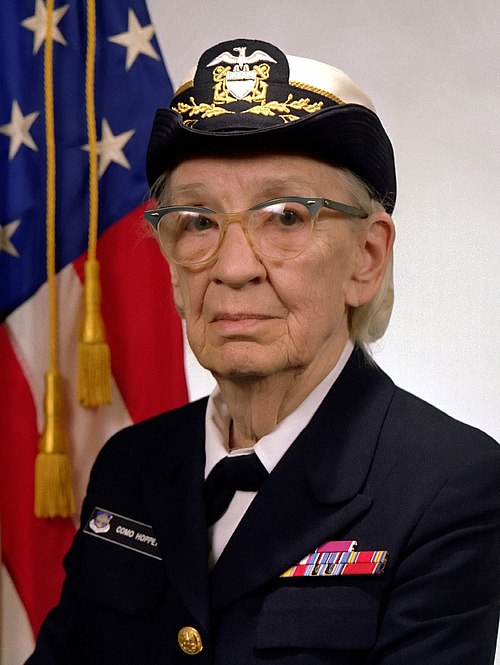
| Grace Hopper |
Computers started as large machines with vacuum tubes used to calculate the trajectory of missiles. They became increasingly smaller and faster. Flow-Matic, a precursor of COBOL, was invented by Navy Rear Admiral Grace Hopper. Flow-Matic was the first English language type programming language. Flow-Matic became publicly available in early 1958 and was substantially complete in 1959. Later additions were structured programming, object-oriented programming and Java-type languages that automatically handle garbage collection and pointers to prevent memory leaks. The internet began on January 1, 1983, and the World Wide Web was developed in 1989 at CERN in Switzerland. Google was founded on September 4, 1998, by American computer scientists Larry Page and Sergey Brin while they were PhD students at Stanford University in California.
It was Grace Hopper who invented the term debugging when an insect stopped a large mainframe computer from working, and the term spread to refer to any small error in software development that causes big problems. One major cause of bugs was the use of "go to" statements in computer code that led to spaghetti code. Newer languages don't have the "go to" statement for this reason.
Quantum mechanics began with the theory of Max Planck that energy doesn't adjust gradually, but in discrete packets, or quantum jumping. Planck did research on how the intensity of the electromagnetic radiation emitted by a black body (a perfect absorber, also known as a cavity radiator) depends on the frequency of the radiation (i.e., the color of the light) and the temperature of the body. In December 1900, Planck discovered the Planck postulate, which means that electromagnetic energy could be emitted only in quantized form, in other words, the energy could only be a multiple of an elementary unit: E = hv, where h is the Planck constant and ν is the frequency of the radiation. This is contrary to classical physics, which is based on gradual changes in energy.

|
| Albert Einstein |
Einstein's research on the photoelectric effect won him the 1921 Nobel Prize in Physics while doing science in his spare time while working at a Swiss patent office. His Prussian professors refused to recommend him for a professor position because they thought he was too disobedient, which is why his friends got him a position at the patent office. Einstein's research on the photoelectric effect was to solve a problem discovered by the German physicist Philipp Lenard. Einstein explained why Lenard's experiments with light couldn't make red photons have as much energy as blue light, no matter how great the intensity of the red light, because blue photons have a higher frequency (energy state) than red photons. Using more red photons wasn't effective because none of the red photons had the same amount of energy as blue photons. Einstein's result is consistent with quantum mechanics, which claims that energy jumps not gradually, but in discrete packets. However, when Hitler took power Lenard joined the Nazis and published a book condemning Jewish science. Nazis formed anti-Einstein clubs, and Einstein fled to America. Immigration officials made an exception to our immigration quotas because of Einstein's fame. Einstein became a professor at Princeton University.
In 1923 Robert A. Millikan won a Nobel Prize for an experiment accurately measuring Planck's Constant, proving that Einstein's work on the photoelectric effect was correct. However, Millikan didn't believe that the existence of photons could explain this until years after his experiment was completed. Like most physicists at the time, Millikan believed in the classical theory that light was made up of waves, not particles.
Einstein explained Brownian Motion. His theory describes the total diffusion of small particles as the result of the random movement of molecules. Einstein's special theory of relativity described speeds near the speed of light in a vacuum (299,792,458 metres per second, or approximately 700 million miles per hour) as having more time and less space, and normal speeds as allowing more space and less time. His equation E=mc² (energy = mass times the speed of light squared) means that mass contains energy. Einstein's general theory of relativity describes four-dimensional space time in order to explain gravity, where your future tends in the direction of a massive object. Einstein's equations have been found to be extremely accurate many times. Gravity can even cause gravitational lensing, bending light itself. Einstein's theories are used for GPS.
Light travels slower through air and slower still through water. The reason nothing can go faster than the speed of light through a vacuum is that, since the kinetic energy needed to move an object converts to matter, it would take an infinite amount of energy to move an object at the speed of light through a vacuum.
Werner Heisenberg described quantum uncertainty. He said that at the atomic level, the more certainty there was as to the position, the less certainty there was as to the velocity, and that the more certainty there was as to the velocity, the less certainty there was as to the position. Quantum uncertainty also applies to the particle-wave duality of light, so that the more certainty there is in proving the particle nature of light, the less certainty there was in showing the wave nature of light, and vice versa. In 1801 Thomas Young did an early version of the double slit experiment using cards to prove the wave-like nature of light. Later double slit experiments showed that light could appear to be either particles or waves. In this Copenhagen interpretation, complementarity means a double slit experiment on photons from a laser can demonstrate particle behavior (passing through a definite slit when measurements are made to observe each particle) or wave behavior (wave-created interference when no attempt is made to observe which particle went through which slit), but not both at the same time. In a Copenhagen-type view, the question of which slit a particle travels through has no meaning when there is no detector. Even though Einstein's research on the photoelectric effect was consistent with quantum mechanics, he didn't completely accept the uncertainty theory. As Einstein said, "The theory produces a good deal but hardly brings us closer to the secret of the Old One. I am at all events convinced that He does not play dice."
As a patriotic German, Heisenberg worked on the German nuclear weapons program, known as Uranverein, when Hitler was in power. However, although Heisenberg correctly found that the uranium 235 isotope could be used to create nuclear power, the program failed to result in creating a nuclear bomb. In December 1944, Heisenberg lectured in neutral Switzerland. The United States Office of Strategic Services sent agent Moe Berg to attend the lecture, carrying a pistol, with orders to shoot Heisenberg if his lecture indicated that Germany was close to completing an atomic bomb.
Quantum particles can exist in multiple states simultaneously, a phenomenon known as superposition, and their properties remain uncertain until they are measured. The physicist Erwin Schrödinger used the analogy of a cat to describe quantum superposition. In Schrödinger's formulation, a cat, a flask of poison, and a radioactive source are placed in a sealed box. If an internal radiation monitor such as a Geiger counter detects radioactivity (a single atom decaying), the flask is shattered, releasing the poison, which kills the cat. If no decaying atom triggers the monitor, the cat remains alive. Mathematically, the wave function that describes the contents of the box is a combination, or quantum superposition, of these two possibilities. Yet, when one looks in the box, one sees the cat either alive or dead, not both alive and dead. This poses the question of when exactly quantum superposition ends and reality resolves into one possibility or the other.
Quantum tunneling occurs where a quantum particle has a nonzero probability to appear on the other side of a potential energy barrier that it classically does not have enough energy to cross; this happens because matter can behave like a wave described by a quantum wave function. Before quantum mechanics, it was thought that particles and waves were completely separate things. However, quantum mechanics is based on particle-wave duality.
Molecules are made up of atoms, atoms are made up of positively charged protons, neutrons and negatively charged electrons, and protons and neutrons are made up of quarks held together by gluons. Our universe consists of up quarks and down quarks, although high-energy states include quarks strange, charm, top and bottom. Up quarks have a 2/3 charge, and down quarks have a -1/3 charge. Protons have two up quarks and one down quark for an overall charge of one. Neutrons have two down quarks and one up quark for an overall neutral charge. However, experiments show that there are charged particles in the neutron even though the charges add up to zero. Muon and tao particles are high-energy versions of the electron. The Higgs boson makes matter solid and was confirmed to exist in 2012. Most of the universe is made up of dark matter and dark energy. No one is sure what dark matter is, but it affects the gravity of planets and stars. Dark energy acts as the opposite of gravity and drives the accelerating expansion of the universe. In the standard Lambda-CDM model of cosmology, the mass–energy content of the universe is 5 percent ordinary matter, 26.8 percent dark matter, and 68.2 percent dark energy. Thus, dark matter constitutes 85 percent of the total mass, while dark energy and dark matter constitute 95 percent of the total mass–energy content. Dark matter is not known to interact with ordinary baryonic matter and radiation except through gravity, making it difficult to detect in the laboratory. Black holes are highly compressed forms of matter and are the result of collapsed stars. Nothing, not even light, can escape the event horizon of a black hole.
Researchers believe everything that exists exploded from a single point of infinite density, known as a singularity. During the 1930s Georges Lemaitre, a Belgian theoretical physicist, proposed that the universe emerged from a "primeval atom" – the theory known as the Big Bang. The Big Bang is a physical theory that describes how the universe expanded from an initial state of high density and temperature. The uniformity of the universe, known as the horizon and flatness problems, is explained through cosmic inflation: a phase of accelerated expansion during the earliest stages. Detailed measurements of the expansion rate of the universe place the Big Bang singularity at an estimated 13.787±0.02 billion years ago, which is considered the age of the universe. The models describe an extraordinarily hot and dense primordial universe. As the universe expanded, it cooled sufficiently to allow the formation of subatomic particles and later atoms. These primordial elements-mostly hydrogen, with some helium and lithium-then coalesced under the force of gravity, aided by dark matter, forming early stars and galaxies. Measurements of the redshifts of supernovae indicate that the expansion of the universe is accelerating because of dark energy.
Bell Labs researchers Arno Penzias and Robert Woodrow Wilson were conducting radio astronomy experiments in 1964 using a horn antenna located on the company's campus in Holmdel, N.J. The reflector antenna was the most sensitive in the world at the time. It was constructed to pick up weak radio signals from space for Project Echo, NASA’s experimental 1960 satellite communications program. The project successfully did so twice, first in 1961 through the passive Echo communication satellite, and a second time in 1963 through the active Telstar communications satellite. While Penzias and Wilson were using the Holmdel antenna to map radio signals from the Milky Way, it picked up a mysterious buzzing noise that wouldn't go away despite their attempts to eliminate it. The signals, which persisted day and night, turned out to be cosmic microwave background radiation that permeates the universe—a remnant from the creation of the cosmos—that helped confirm the big bang theory. The accidental breakthrough earned Penzias and Wilson the 1978 Nobel Prize in Physics.
Our universe is made up of matter. In theory, a universe could be made up of antimatter. However, if matter and antimatter combine, they annihilate in a burst of gamma rays.

|
| Crab Nebula |
Einstein described "weird action at a distance" or quantum entanglement as part of quantum mechanics. Quantum entanglement describes atomic particles that, when entangled, a change to one affects the other even if the particles are far apart. In April 2022, a study led by Dr. Jian-Wei Pan, a physicist at the University of Science and Technology of China, reported a new record in quantum teleportation distance. Pan and his team successfully transmitted quantum information over 1,200 kilometers via satellite using entangled photons. Quantum teleportation could lead to the development of quantum networks that transmit data with unparalleled security. Traditional encryption methods rely on complex algorithms that can, in theory, be cracked by sufficiently advanced computers. Quantum communication, however, uses entangled particles to detect any eavesdropping, as any interference disrupts the entangled state and alerts the sender and receiver. Beyond security, quantum teleportation could supercharge quantum computing, where information is processed exponentially faster than classical computing.
Fritz Haber (1868-1934), a German Jewish scientist, won a Nobel Prize in Chemistry in 1918 for the Haber–Bosch process, a method used in industry to synthesize ammonia from nitrogen gas and hydrogen gas. This invention is important for the large-scale synthesis of fertilizers and explosives. Fertilizers based on this process are used for about one-third of the world's food production. Haber invented chlorine gas during World War I. In 1915, during the Second Battle of Ypres, Haber orchestrated one of history's first large-scale poison gas attacks using chlorine gas. On April 22nd, he personally signaled the release of approximately 170 tons of chlorine gas against French troops. The attack caused widespread panic and suffering among soldiers who were unprepared for such a horrific weapon. Thousands succumbed to its effects as they experienced agonizing deaths from suffocation and lung damage. Faber's wife Clara Immerwahr's opposition to her husband's wartime endeavors grew increasingly intense; she viewed his work as a betrayal of scientific ethics. Following Haber's celebration of his successful gas attack, Clara took her own life with his revolver. When the Nazis rose to power in 1933, he faced persecution due to his Jewish heritage. Despite having been celebrated as a national hero, he became a pariah in Germany and fled to England for refuge but was met with scorn there as well. The Nazis seized his research materials and inventions for their own ends; notably, they adapted one of his compounds — hydrogen cyanide — into Zyklon B for use in gas chambers during the Holocaust. Zyklon B was intended for use as an insecticide, but the Nazis used much more than enough to kill insects.
Artificial intelligence (AI) could lead to advances in medicine and science, but could also be used by malicious actors to exploit hidden vulnerabilities in computer software or create bioweapons.
The first modern computer, ENIAC, was developed for the Army at the University of Pennsylvania; the Tomahawk cruise missile was largely developed by Johns Hopkins's Applied Physics Lab. Other examples of scientific and technological progress at universities funded by the government include: the internet, GPS, smartphones, artificial intelligence, MRIs, LASIK, Ozempic and COVID vaccines.

|
| Particles and forces in nature |
The four forces in nature are the strong force holding atoms together, the weak force that causes particle decay, electromagnetism, and gravity, the weakest force.
Albert Einstein suggested, through his theory of general relativity, that gravity is not an attraction or a force. Instead, it's a consequence of objects bending space-time. A large object works on space-time a bit like how a large ball placed in the middle of a sheet affects that material, deforming it and causing other, smaller objects on the sheet to fall toward the middle. Though gravity holds planets, stars, solar systems and even galaxies together, it turns out to be the weakest of the fundamental forces, especially at the molecular and atomic scales.
The weak force, also called the weak nuclear interaction, is responsible for particle decay. This is the literal change of one type of subatomic particle into another. So, for example, a neutrino that strays close to a neutron can turn the neutron into a proton while the neutrino becomes an electron. Physicists describe this interaction through the exchange of force-carrying particles called bosons. Specific kinds of bosons are responsible for the weak force, electromagnetic force and strong force. In the weak force, the bosons are charged particles called W and Z bosons. When subatomic particles such as protons, neutrons and electrons come within 10^-18 meters, or 0.1 percent of the diameter of a proton, of one another, they can exchange these bosons. As a result, the subatomic particles decay into new particles. The weak force is critical for the nuclear fusion reactions that power the sun and produce the energy needed for most life forms here on Earth. It's also why archaeologists can use carbon-14 to date ancient bone, wood and other formerly living artifacts. Carbon-14 has six protons and eight neutrons; one of those neutrons decays into a proton to make nitrogen-14, which has seven protons and seven neutrons. This decay happens at a predictable rate, allowing scientists to determine how old such artifacts are. In the 1960s–70s, physicists Glashow, Salam, and Weinberg showed that the weak force and electromagnetism are actually two aspects of a single electroweak force at high energies. This earned them the Nobel Prize in 1979.
The electromagnetic force, also called the Lorentz force, acts between charged particles, like negatively charged electrons and positively charged protons. Opposite charges attract one another, while like charges repel. The greater the charge, the greater the force. And much like gravity, this force can be felt from an infinite distance (albeit the force would be very, very small at that distance). Electromagnetic forces are transferred between charged particles through the exchange of massless, force-carrying bosons called photons, which are also the particle components of light. The force-carrying photons that swap between charged particles, however, are a different manifestation of photons. They are virtual and undetectable, even though they are technically the same particles as the real and detectable version. The electromagnetic force is responsible for some of the most commonly experienced phenomena: friction, elasticity, the normal force and the force holding solids together in a given shape. It's even responsible for the drag that birds and planes experience while flying. These actions can occur because of charged (or neutralized) particles interacting with one another. The normal force that keeps a book on top of a table (instead of gravity pulling the book through to the ground), for example, is a consequence of electrons in the table's atoms repelling electrons in the book's atoms.
Electroweak unification is the theoretical framework that unifies the electromagnetic and weak nuclear forces into a single electroweak force, mediated by W, Z, and photon bosons. Electroweak unification describes how electromagnetism and the weak nuclear force, which appear distinct at low energies, are actually two aspects of a single fundamental interaction at high energies, above approximately 246 GeV (or temperatures around 10¹⁵ K). This unification is a cornerstone of the Standard Model of particle physics and was formalized in the 1960s by Sheldon Glashow, Abdus Salam, and Steven Weinberg, who received the 1979 Nobel Prize for their contributions.
The strong nuclear force, also called the strong nuclear interaction, is the strongest of the four fundamental forces of nature. It's 6 thousand trillion trillion trillion (that's 39 zeroes after 6) times stronger than the force of gravity. And that's because it binds the fundamental particles of matter together to form larger particles. It holds together the quarks that make up protons and neutrons, and part of the strong force also keeps the protons and neutrons of an atom's nucleus together. Much like the weak force, the strong force operates only when subatomic particles are extremely close to one another. The strong force is odd, though, because unlike any of the other fundamental forces, it gets weaker as subatomic particles move closer together. It actually reaches maximum strength when the particles are farthest away from each other, according to Fermilab. Once within range, massless charged bosons called gluons transmit the strong force between quarks and keep them "glued" together. A tiny fraction of the strong force called the residual strong force acts between protons and neutrons. Protons in the nucleus repel one another because of their similar charge, but the residual strong force can overcome this repulsion, so the particles stay bound in an atom's nucleus.
Quantum chromodynamics (QCD) is the study of the strong interaction between quarks mediated by gluons. Quarks are fundamental particles that make up composite hadrons such as the proton, neutron and pion. The QCD analog of electric charge is a property called color. Gluons are the force carriers of the theory, just as photons are for the electromagnetic force in quantum electrodynamics. For the three color properties, the word "color" is an analogy. Just as red, green and blue combine to make different colors on television and movie screens, the three QCD color properties work together as part of the strong interaction. They aren't literal colors, although the three charges are described as red, green and blue.
Quantum electrodynamics (QED) is a quantum field theory that unifies quantum mechanics and special relativity to describe the interactions of electrically charged particles with the electromagnetic field. It mathematically accounts for all phenomena involving electrons, positrons, and photons, providing a quantum counterpart to classical electromagnetism. QED is renowned for its extremely precise predictions, such as the anomalous magnetic moment of the electron and the Lamb shift in hydrogen energy levels, making it one of the most rigorously tested theories in physics
|
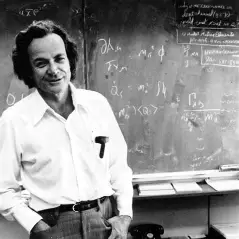
| Richard Feynman |
Richard Feynman won the Nobel Prize in physics for his work on quantum electrodynamics (QED). In his 1974 commencement speech on Cargo Cult Science he explained the scientific method to his students as "a specific, extra type of integrity that is not lying, but bending over backwards to show how you're maybe wrong, that you ought to do when acting as a scientist." As Feynman said:

In the South Seas there is a Cargo Cult of people. During the war they saw airplanes land with lots of good materials, and they want the same thing to happen now. So they’ve arranged to make things like runways, to put fires along the sides of the runways, to make a wooden hut for a man to sit in, with two wooden pieces on his head like headphones and bars of bamboo sticking out like antennas—he’s the controller—and they wait for the airplanes to land. They’re doing everything right. The form is perfect. It looks exactly the way it looked before. But it doesn’t work. No airplanes land. So I call these things Cargo Cult Science, because they follow all the apparent precepts and forms of scientific investigation, but they’re missing something essential, because the planes don’t land.
Now it behooves me, of course, to tell you what they're missing. But it would he just about as difficult to explain to the South Sea Islanders how they have to arrange things so that they get some wealth in their system. It is not something simple like telling them how to improve the shapes of the earphones. But there is one feature I notice that is generally missing in Cargo Cult Science. That is the idea that we all hope you have learned in studying science in school—we never explicitly say what this is, but just hope that you catch on by all the examples of scientific investigation. It is interesting, therefore, to bring it out now and speak of it explicitly. It's a kind of scientific integrity, a principle of scientific thought that corresponds to a kind of utter honesty—a kind of leaning over backwards. For example, if you're doing an experiment, you should report everything that you think might make it invalid—not only what you think is right about it: other causes that could possibly explain your results; and things you thought of that you've eliminated by some other experiment, and how they worked—to make sure the other fellow can tell they have been eliminated.
Details that could throw doubt on your interpretation must be given, if you know them. You must do the best you can—if you know anything at all wrong, or possibly wrong—to explain it. If you make a theory, for example, and advertise it, or put it out, then you must also put down all the facts that disagree with it, as well as those that agree with it. There is also a more subtle problem. When you have put a lot of ideas together to make an elaborate theory, you want to make sure, when explaining what it fits, that those things it fits are not just the things that gave you the idea for the theory; but that the finished theory makes something else come out right, in addition.
In summary, the idea is to try to give all of the information to help others to judge the value of your contribution; not just the information that leads to judgment in one particular direction or another.
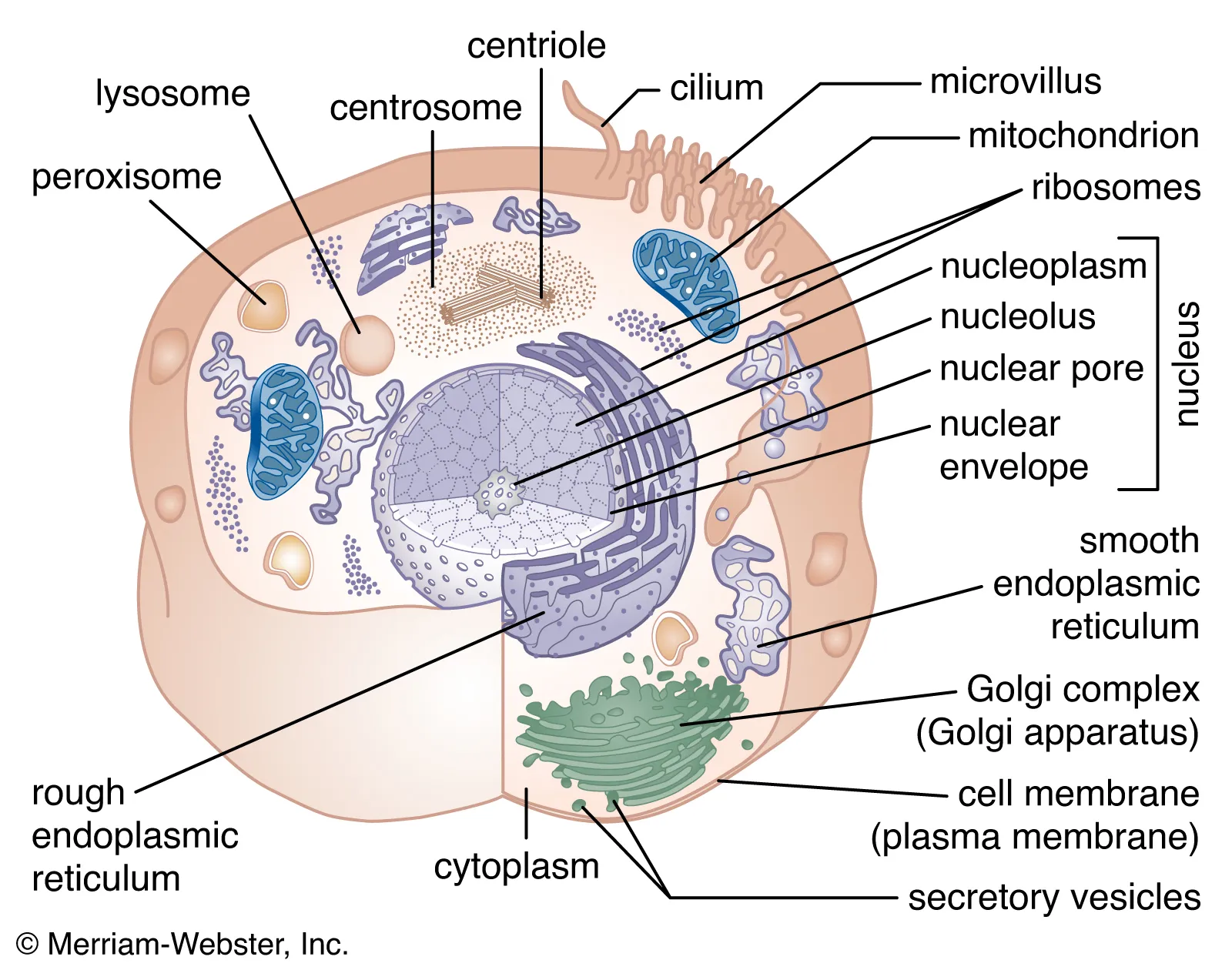
|
| Cell |
The Krebs Citric Acid cycle is essential for life. Research on it was done by Albert Szent-Gyorgyi, Hans Adolf Krebs and William Arthur Johnson during the 1930s. Sugar from food and oxygen from the lungs to the blood go into it. In the mitochondria of cells the cycle goes to citrate, isocitrate, oxoglutarate, succinyl-coenzyme A, succinate, fumarate, malate and oxaloacetate. ATP (adenosine triphosphate), or stored energy, is the result of this process. In theory, it is important for muscle movement. We would die without it.
The Golgi apparatus is a membrane-bound organelle in eukaryotic cells that modifies, sorts, and packages proteins and lipids for transport within or outside the cell. It was discovered in 1898 by Italian scientist Camillo Golgi.
Ribosomes synthesize proteins by translating genetic information encoded in messenger RNA (mRNA), linking amino acids into a polypeptide chain. They were first observed by George Emil Palade in 1955.
The rough endoplasmic reticulum: Studded with ribosomes on its cytoplasmic surface, giving it a "rough" appearance. It is primarily involved in protein synthesis, folding, and modification, especially for proteins destined for secretion, the plasma membrane, or lysosomes.
The smooth endoplasmic reticulum: Lacks ribosomes and appears smooth. It is involved in lipid and steroid synthesis, detoxification of drugs and toxins, and calcium storage. It contain various enzymes, such as NADH-cytochrome C reductase and glucose-6-phosphatase, which facilitate its synthetic and metabolic functions.
The endoplasmic reticulum was observed by light microscopy by Charles Garnier in 1897. The lacy membranes of the endoplasmic reticulum were first seen by electron microscopy in 1945 by Keith R. Porter, Albert Claude, and Ernest F. Fullam.
Lysosomes are membrane-bound organelles that act as the cell’s digestive and recycling centers, breaking down macromolecules, damaged organelles, and pathogens. The lysosome was discovered by Christian de Duve in 1955, who later received a Nobel Prize for his work on lysosomes and peroxisomes.
A peroxisome is a small, membrane-bound organelle in eukaryotic cells that carries out oxidative reactions, including fatty acid breakdown and detoxification of harmful compounds.
The centrosome is the primary microtubule-organizing center (MTOC) in the cytosol, coordinating microtubule nucleation, spindle formation, and cell cycle progression.
Eukaryotic cells have a nucleus, whereas prokaryotic cells do not have a nucleus. Plants and animals are eukareotic, wheras bacteria, viruses and archaea are prokaryotic. Bacterea have a nucleoid region within the cytoplasm, but not a true nucleus. Viruses aren't cells at all. Archaea live in extreme habitats such as thermal vents or hypersaline water.
Mendel was an Austrian who founded genetics. His work on pea plants led to his discovery of recessive and dominant traits. In 1866 he published his description of what are now called genes.
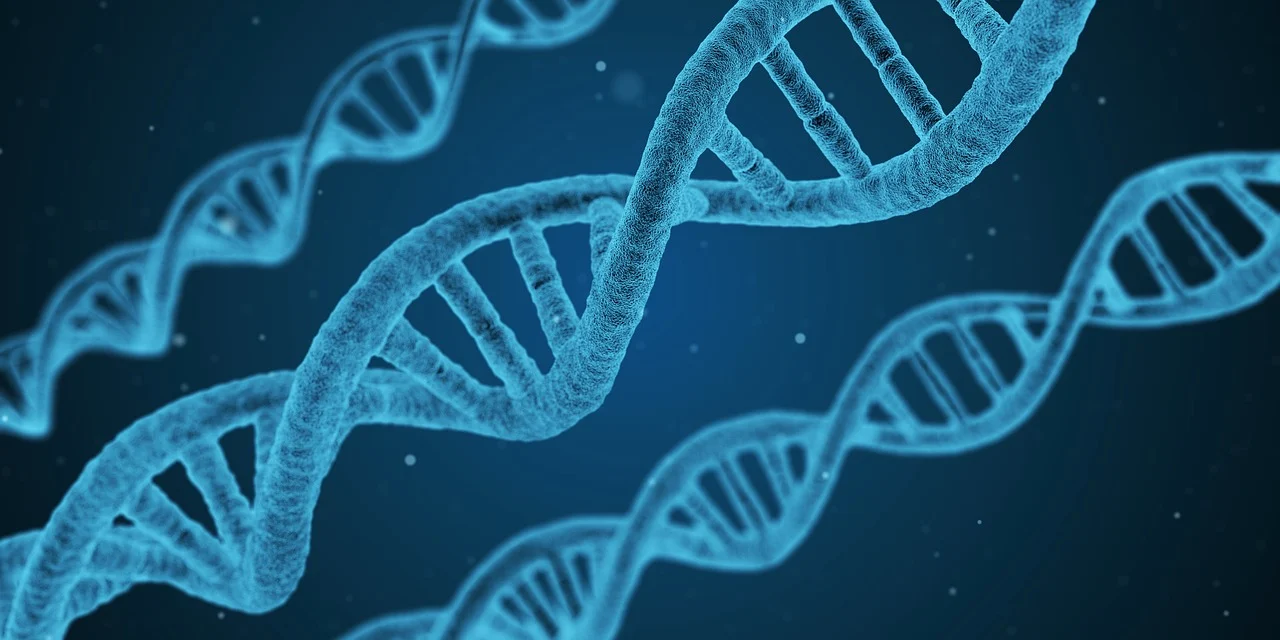
|
| DNA Double Helix |
You receive one copy of a gene from each parent (one from the egg and one from the sperm). Once you receive a pair, your genes divide and copy themselves. There are approximately 20,000 to 25,000 genes in your body.
Chromosomes are structures that look like threads, which exist in the nucleus of cells. A chromosome is a strand of DNA wrapped around proteins called histones, which allow DNA strands that can be six feet long to pack up small enough to fit in a nucleus.
A gene is a section of DNA that codes for a specific trait, while an allele is a variant form of a gene, meaning different versions of the same gene, and a chromosome is a thread-like DNA strand in the cell nucleus that contains many genes, with each individual gene occupying a specific location on the chromosome called a locus; essentially, a chromosome holds multiple genes, and different versions of a gene are called alleles.
While all chromosomes are DNA strands, not all DNA strands are chromosomes. Some examples of nonchromosomal DNA include some types of DNA in bacteria and viruses, and eukaryotic cells containing energy-producing organelles—mitochondria (and in plants, chloroplasts)—each with its own small, circular genome. Human mitochondrial DNA (mtDNA) is about 16,569 base pairs long and encodes 37 genes essential for respiration.
There are two genes for each trait. Some are dominant and others are recessive. For example, if you get one gene for brown eyes and another for blue eyes, you'll probably have brown eyes, since the gene for brown eyes is dominant. Humans inherit 23 pairs of chromosomes, for a total of 46. For the sex chromosome, XY is male and XX is female.
Accredited with the discovery of DNA, Friedrich Miescher was a Swiss physician who investigated nuclei in used bandages. In 1869, he was the first scientist to isolate nucleic acid. Later, Miescher raised the idea that nucleic acids could be involved in heredity and even posited that there might be something akin to an alphabet that might explain how variation is produced.
In 1953 Francis Crick and James Watson published an article in Nature that, along with research done by Maurice Wilkins and Rosalind Franklin, described the DNA double helix. Complementary nucleotides with hydrogen bonds connect the two strands (the sugar-phosphate backbone) of the helix.
The DNA double helix is made of deoxyribose sugar with 5 carbon molecules.
- Carbon 1' attaches to a nitrogen base (adenine, thymine, guanine or cytosine).
- Carbon 2' is NOT attached to oxygen, which makes it more stable than RNA.
- Carbon 3' is attached to a hydroxyl group (−OH), a group consisting of one oxygen atom covalently bonded to one hydrogen atom.
- Carbon 4' exists.
- Carbon 5' is attached to a phosphate group (PO₄³⁻), a group consisting of one phosphorus atom and four oxygen atoms with a -3 charge.
- The hydroxyl group attached to carbon 3' of the existing sugar joins the phosphate group attached to carbon 5' of the new sugar through a phosphodiester bond.
The Messenger RNA (mRNA) backbone is made of ribose sugar with 5 carbon molecules. Ribose sugar is the same as deoxyribose sugar EXCEPT FOR THE FOLLOWING:
- Carbon 1' attaches to a nitrogen base (adenine, URACIL, guanine or cytosine).
- Carbon 2' IS ATTACHED TO OXYGEN, which makes it less stable than DNA.
Ribosomal RNA (rRNA) and Transfer RNA (tRNA) are also made of 5 carbon sugar molecules.
For 5' end to 3' end directionality:
- DNA strands have a built-in direction, like a one-way street. The backbone runs 5' → 3' on one strand.
- Antiparallel strands: In the double helix, the two strands run in opposite directions — one strand goes 5' → 3', while its partner runs 3' → 5' alongside it. This antiparallel arrangement is essential for base pairing and for how enzymes read and copy DNA.
- Synthesis direction: DNA polymerase (the enzyme that builds new DNA) can only add nucleotides to the 3' end of a growing strand, so replication always proceeds 5' → 3'.
Sugars are molecules with carbon atoms. Monosaccharides can be classified by the number of carbon atoms they contain: triose (3), tetrose (4), pentose (5), hexose (6), heptose (7), and so on. Most monosaccharides have a sweet taste. Examples of monosaccharides include glucose (dextrose), fructose (levulose), and galactose. Monosaccharides are the building blocks of disaccharides (such as sucrose, lactose and maltose) and polysaccharides (such as cellulose and starch).
Life is based on right-handed sugar molecules forming the backbone of DNA and left-handed amino acids. In theory, mirror-image life with left-handed sugar molecules and right-handed amino acids is possible but does not exist in our world. If it did exist it could lead to diseases which our immune system can't recognize, so any attempt to create mirror-image life would be dangerous.
For base pairing between the two strands of DNA:
- adenine connects to thymine
- thymine connects to adenine
- guanine connects to cytosine
- cytosine connects to guanine
When the genetic code is transcribed from DNA to messenger RNA (mRNA):
- adenine connects to uracil
- thymine connects to adenine
- guanine connects to cytosine
- cytosine connects to guanine
Uracil is almost the same as thymine except that thymine has a methyl group (CH3) attached to its ring structure for stability, whereas uracil does not have this methyl group.
RNA polymerase attaches to the part of DNA where transcription is to occur and separates the two strands of DNA at that section. Then transcription occurs from the transcription strand of DNA to mRNA. For eukaryotes (organisms that have a cell nucleus), a 5' cap is added to the beginning and a 3' poly-A (a chain of adenine nucleotides) tail is added at the end. Many eukaryotic pre-mRNAs undergo splicing. In this process, parts of the pre-mRNA (called introns) are chopped out, and the remaining pieces (called exons) are stuck back together to form a mature mRNA. End modifications increase the stability of the mRNA, while splicing gives the mRNA its correct sequence. If the introns are not removed, they'll be translated along with the exons, producing a "gibberish" polypeptide. The mature mRNA then goes into the cell nucleus to build a protein or enzyme from among 20 amino acids according to the genetic code.
Messenger RNA is transcribed from DNA in the nucleus and carries a copy of the genetic code out to the cytoplasm. This code is read in groups of three nucleotides called codons (e.g., AUG, GGC, UUA), and each codon specifies a particular amino acid — or a "stop" signal. The ribosome is made of two subunits (large and small), built from ribosomal RNA (rRNA) and proteins. It clamps onto the mRNA strand and moves along it one codon at a time, acting like a molecular "reader head." Transfer RNA (tRNA) molecules each carry a specific amino acid on one end. On the other end, each tRNA has an anticodon — a three-nucleotide sequence complementary to a specific mRNA codon. As the ribosome exposes each codon, only the tRNA with the matching anticodon can bind there (via base pairing: adenine to uracil, guanine to cytosine). Proteins that are synthesized in the rough endoplasmic reticulum are packaged into vesicles and transported to the Golgi apparatus. The Golgi apparatus transports, modifies, and packages proteins for delivery to targeted destinations.
The ribosome has three key sites (A, P, and E sites) where tRNAs move through in sequence:
- A site (Aminoacyl): incoming tRNA with its amino acid docks here, matching the current codon
- P site (Peptidyl): holds the tRNA attached to the growing amino acid chain
- E site (Exit): the "used" tRNA (no longer carrying an amino acid) exits here
The ribosome catalyzes a peptide bond between the new amino acid and the growing chain, then shifts (translocates) one codon down the mRNA, repeating the cycle.
When the ribosome reaches a stop codon (UAA, UAG, or UGA) — which no tRNA matches — release factors trigger the finished protein chain to detach, and the ribosome disassembles.
In short: mRNA is the blueprint, the ribosome is the assembly machine, and tRNA is the delivery truck that translates the three-letter genetic code into a specific sequence of amino acids, one peptide bond at a time.
Proteins built from amino acids are used for:
- Antibodies to protect against disease
- Enzymes as catalysts for chemical reactions (lipase, carbohydrase, trypsin, thrombin, pepsin and so on)
- Messenger proteins send chemical signals between different cells, tissues and organs
- Motor proteins help things move within and between your cells
- Structural proteins offer support for your body's cells (collagen, tubulin, actin and so on)
- Transport/channel proteins act as doorways for molecules to move between parts of a cell or between a cell and its environment
The ancient belief was that disease spread either through a miasma in the air or through spontaneous generation. The Greek historian Thucydides (c. 460 – c. 400 BC) was the first person to write, in his account of the plague of Athens, that diseases could spread from an infected person to others.
In 1668, Italian physician Francesco Redi published experimental evidence rejecting spontaneous generation, the theory that living creatures arise from nonliving matter. He observed that maggots only arose from rotting meat that was uncovered. When meat was left in jars covered by gauze, the maggots would instead appear on the gauze's surface, attracted by the smell.
German Jesuit priest and scholar Athanasius Kircher (or "Kirchner," as it is often spelled) was the first to attribute infectious disease to a microscopic pathogen, inventing the germ theory of disease, which he outlined in his Scrutinium Physico-Medicum, published in Rome in 1658. Microorganisms are said to have been first directly observed in the 1670s by Anton van Leeuwenhoek, considered "the Father of Microbiology."
Ignaz Semmelweis, a Hungarian obstetrician working at the Vienna General Hospital (Allgemeines Krankenhaus) in 1847, noticed the dramatically high maternal mortality from puerperal fever following births assisted by doctors and medical students. Semmelweis made doctors wash their hands with chlorinated lime water before examining pregnant women. He then documented a sudden reduction in the mortality rate from 18 percent to 2.2 percent over a period of a year. Despite this evidence, he and his theories were rejected by most of the contemporary medical establishment.
British physician John Snow is credited as a founder of modern epidemiology for studying the 1854 Broad Street cholera outbreak. in 1855, Snow theorized that cholera was caused by cells smaller than human epithelial cells, leading to Robert Koch's 1884 confirmation of the bacterial species Vibrio cholerae as the causative agent.
Building on Redi's work, Pasteur disproved spontaneous generation by constructing swan neck flasks containing nutrient broth. Since the flask contents were only fermented when in direct contact with the external environment's air by removing the curved tubing, Pasteur demonstrated that bacteria must travel between sites of infection to colonize environments. This work was later extended by Robert Koch in the 1880s. Pasteur's works are credited with saving millions of lives through the development of vaccines for rabies and anthrax. He is regarded as one of the founders of modern bacteriology and microbiology. By the end of that decade, the miasma theory was struggling to compete with the germ theory of disease. Viruses were initially discovered in the 1890s. Pasteur developed pasteurization of beer, wine and milk, using heat to kill germs.
After reading Pasteur's papers on bacterial fermentation, British surgeon Joseph Lister recognized that compound fractures, involving bones breaking through the skin, were more likely to become infected due to exposure to environmental microorganisms. He recognized that carbolic acid could be applied to the site of injury as an effective antiseptic.
Germs include bacteria and viruses. Bacteria can cause disease, but can also be good for health. Bacteria are single cells. Viruses are not cells and can't reproduce unless they infect another living organism. Most viruses cause disease and act like parasites.
Penicillin, the first antibiotic, was discovered accidentally in 1928 by Alexander Fleming, a Scottish biologist working at St. Mary's Hospital in London. Fleming noticed that a mold, later identified as Penicillium notatum, was growing on a petri dish of Staphylococcus bacteria. The mold was producing a substance that inhibited the growth of the bacteria. Fleming named this substance penicillin.
From at least the 15th century, people in different parts of the world have attempted to prevent illness by intentionally exposing healthy people to smallpox– a practice known as variolation (after a name for smallpox, 'la variole'). Some sources suggest these practices were taking place as early as 200 BC.
In 1774, Benjamin Jesty made a breakthrough. Testing his hypothesis that infection with cowpox – a bovine virus that can spread to humans – could protect a person from smallpox. In May 1796, English physician Edward Jenner expanded on this discovery and inoculated 8-year-old James Phipps with matter collected from a cowpox sore on the hand of a milkmaid. Despite suffering a local reaction and feeling unwell for several days, Phipps made a full recovery. Two months later, in July 1796, Jenner inoculated Phipps with matter from a human smallpox sore in order to test Phipps' resistance. Phipps remains in perfect health and becomes the first human to be vaccinated against smallpox.
In 1872 Louis Pasteur created the first laboratory-produced vaccine: the vaccine for fowl cholera in chickens. In 1885 Pasteur successfully prevented rabies through post-exposure vaccination.
In the following decades, vaccines were developed to prevent diphtheria, yellow fever, whooping cough, influenza, polio, measles, mumps, rubella and pneumonia.
A disease is said to be eliminated when it is no longer transmitted at a sustained rate in a geographic area. Diseases that were eliminated in the US include measles, cholera, diphtheria, malaria, polio, rubella, and yellow fever. Diphtheria, polio, and rubella — like measles — were brought under control through the use of the MMR vaccine. However, after President Trump put Robert Kennedy Jr, an antivaxxer, in charge of the Department of Health and Human Services, the largest outbreak of measles in 35 years occurred in 2026. Cholera was eliminated through water and sanitation, though the vaccine is still recommended and useful in places with sustained outbreaks, like Haiti in the Caribbean. Malaria and yellow fever were controlled through maintenance of breeding sites, mosquito repellents, and widespread availability of window screens and air conditioning.
Eradication of an infectious disease is declared when the disease is not found or transmitted anywhere in the world. The only human infectious disease to be eradicated through vaccination is smallpox. In 1980 the World Health Assembly, acting on a recommendation from the WHO Global Commission for the Certification of Smallpox Eradication, declared smallpox eradicated. Polio is on the verge of being eradicated, with cases of the wild (not vaccine derived) strain only found in Central Asia.
Effective COVID-19 vaccines were developed, produced and distributed with unprecedented speed, some using new mRNA technology. In December 2020, just one year after the first case of COVID-19 was detected, the first COVID-19 vaccine doses were administered.
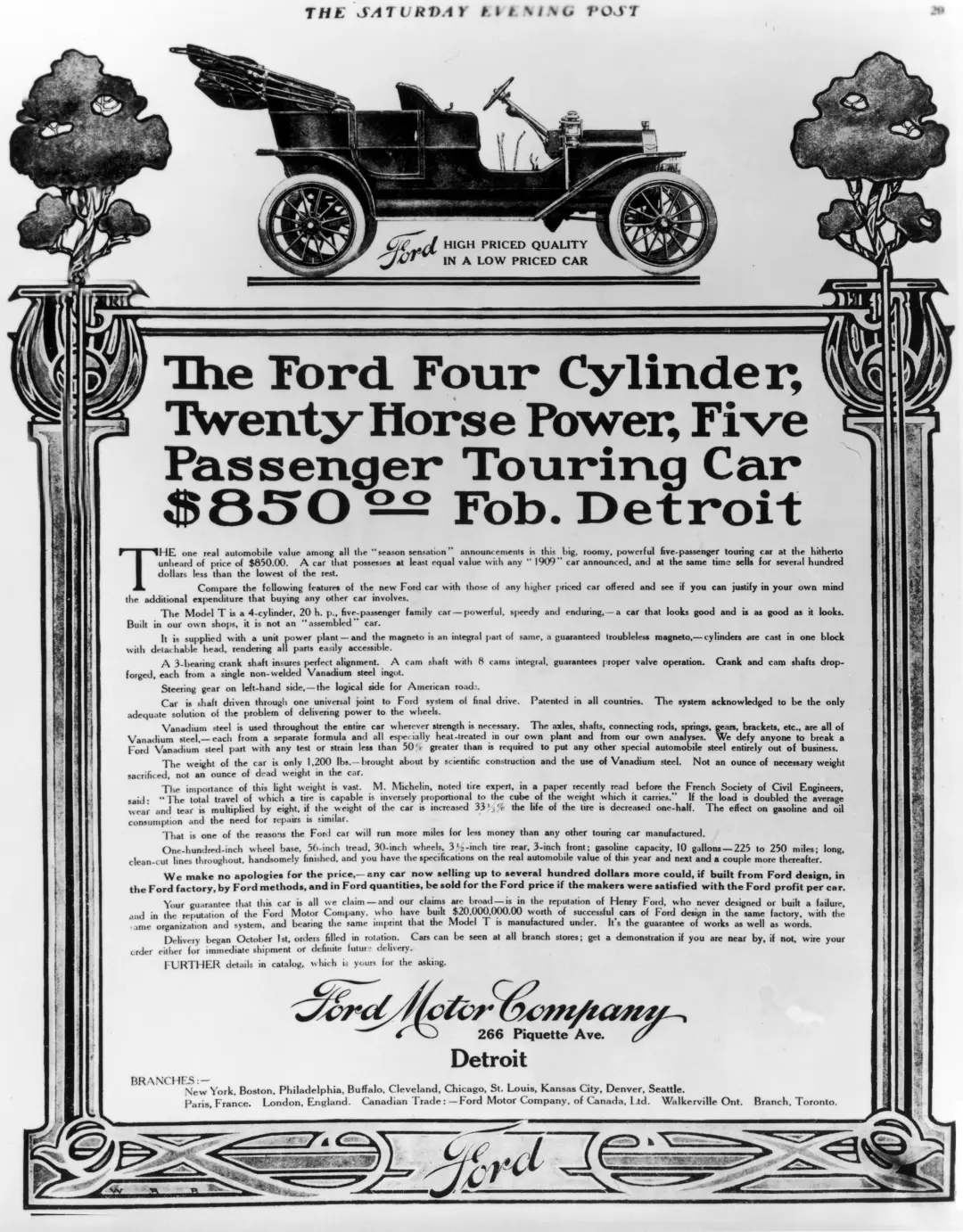
|
| Model T Ad |
In 1903 the head of the Michigan Savings Bank said, "The horse is here to stay but the automobile is only a novelty — a fad."
Many people developed the internal combustion engine over centuries. In 1807 one of the first known working internal combustion engines, called the Pyréolophore – was built by French inventors Claude Niépce and Nicéphore Niépce. This single prototype engine used a series of controlled dust explosions to power a boat upstream in a French river. In 1807, the hydrogen-fueled De Rivaz engine was built by Swiss engineer François Isaac de Rivaz. The engine was powered by a mixture of hydrogen and oxygen gases ignited to create an explosion within the cylinder and drive the piston out. The gas mixture was ignited by an electric spark in the same manner as a modern internal combustion engine. However, gasoline was not used for internal combustion engines until 1870 when carburetors were invented to convert non-combustible liquid fuels into a combustible gaseous mixture form. The French Academy of Sciences argued that the internal combustion engine would never rival the performance of the steam engine. George Brayton invented the first commercial liquid-fueled internal combustion engine in 1872. In 1876, Nicolaus Otto, working with Gottlieb Daimler and Wilhelm Maybach, patented the compressed charge, four-stroke cycle engine. In 1879, Karl Benz patented a reliable two-stroke gas engine. In 1892, Rudolf Diesel developed the first compressed charge, compression ignition engine. These replaced steam-powered trains and ships. The invention of the internal combustion engine led to modern cars, trains and planes.
The assembly line was invented by Eli Whitney between 1797 and 1801. However, Ransom Eli Olds developed a more modern version of the assembly line in the 20th century. They were used to build the first mass-produced automobile, the Oldsmobile Curved Dash, beginning in 1901. Olds was a pioneer of the American automotive industry, after whom the Oldsmobile and REO brands were named. He claimed to have built his first steam car as early as 1887 and his first gasoline-powered car in 1896.

|
| Oldsmobile Model R Curved Dash Runabout 1903 |
Henry Ford invented the Model T, which was first introduced to the world in 1908. Ford didn't invent the car or the assembly line, but he did modernize assembly lines in 1913 for mass-producing Model-T Fords that were affordable and popular. Ford said you can have any color you want, as long as it's black. Ford promoted antisemitism through his newspaper The Dearborn Independent and his book The International Jew. He opposed America's entry into World War II, and served on the board of the America First Committee. Hitler called Ford "a single great man."
At his Highland Park, Michigan plant, Ford and his engineering team — notably Charles Sorensen and William Klann — introduced the moving assembly line for the Model T. Instead of workers moving between stationary cars, the chassis moved past workers on a conveyor system, with each person performing one repetitive task. This cut the time to build a car from about 12 hours to roughly 90 minutes and made the Model T affordable for average Americans.
But Ford didn't invent the idea from scratch. Ransom Olds patented the concept of an assembly line as early as 1901 for building the Oldsmobile Curved Dash, moving cars along tracks between stations. Ford's team acknowledged studying this. The disassembly lines used in Chicago meatpacking plants (like Swift & Company) in the late 1800s inspired Ford's engineers — carcasses moved along overhead trolleys past workers who each did one cutting task. Interchangeable parts, pioneered by people like Eli Whitney in the early 1800s, were a necessary precondition — you can't have an efficient assembly line if parts don't fit uniformly. So Ford's real innovation wasn't the assembly line concept itself, but combining moving conveyance, interchangeable parts, and task specialization at a massive industrial scale — which is why he's remembered as the one who "modernized" it, even though he built on ideas already in circulation.
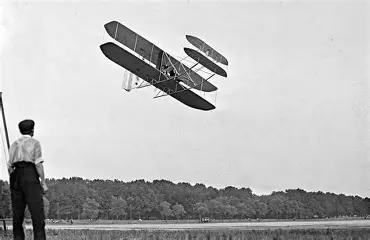
|
| Wright brothers' airplane |
In 1895 In 1895 Lord Kelvin, the head of the Royal Society, said, "Heavier-than-air flying machines are impossible." In 1903 a New York Times editorial read, "A man carrying airplane will eventually be built, but only if mathematicians and engineers work for 1 to 10 million years." In 1911 Marshal Ferdinand Foch, French military strategist, said, "Airplanes are interesting toys but of no military value." The Wright brothers Orville and Wilbur Wright invented the airplane. They made the first controlled, sustained flight of an engine-powered, heavier-than-air aircraft with the Wright Flyer on December 17, 1903, four miles South of Kitty Hawk, North Carolina, at what is now known as Kill Devil Hills. In 1904 the Wright brothers developed the Wright Flyer II, which made longer-duration flights including the first circle, followed in 1905 by the first truly practical fixed-wing aircraft, the Wright Flyer III. The brothers' breakthrough invention was their creation of a three-axis control system, which enabled the pilot to steer the aircraft effectively and to maintain its equilibrium. Their system of aircraft controls made fixed-wing powered flight possible and remains standard on airplanes of all kinds.